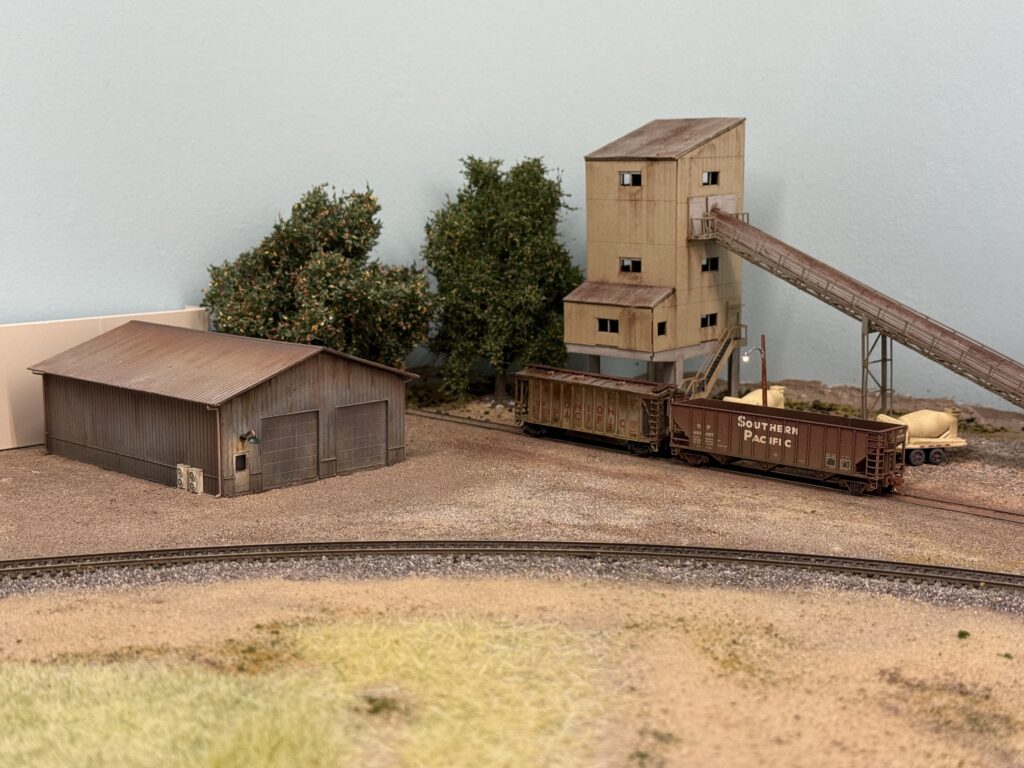
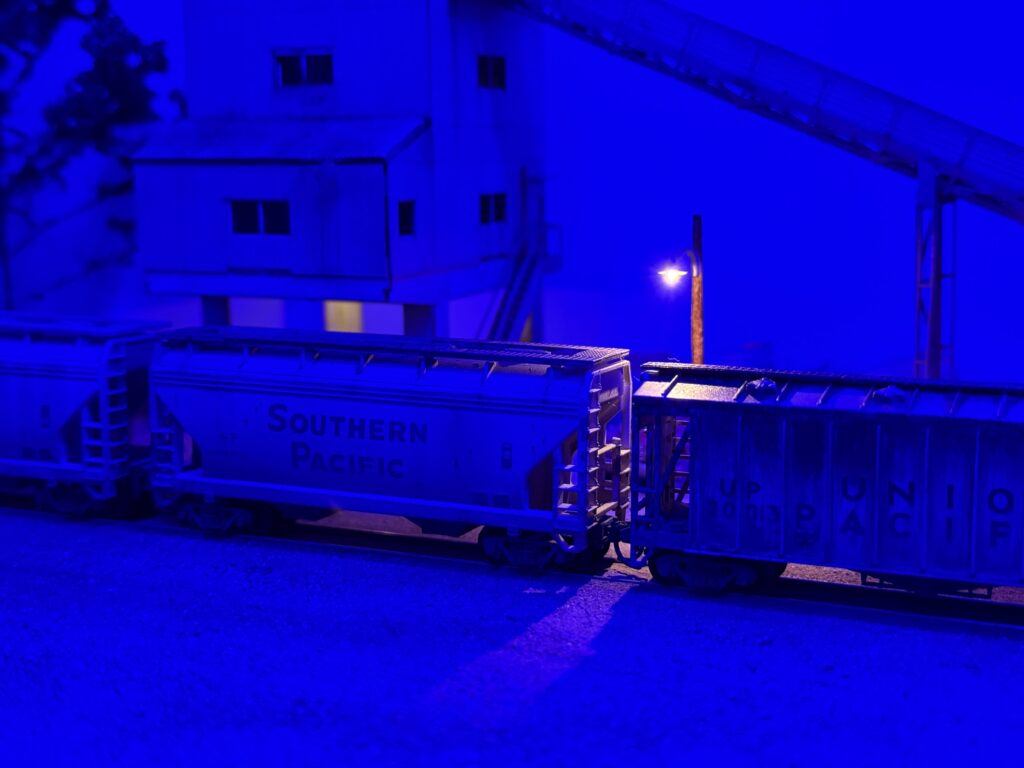
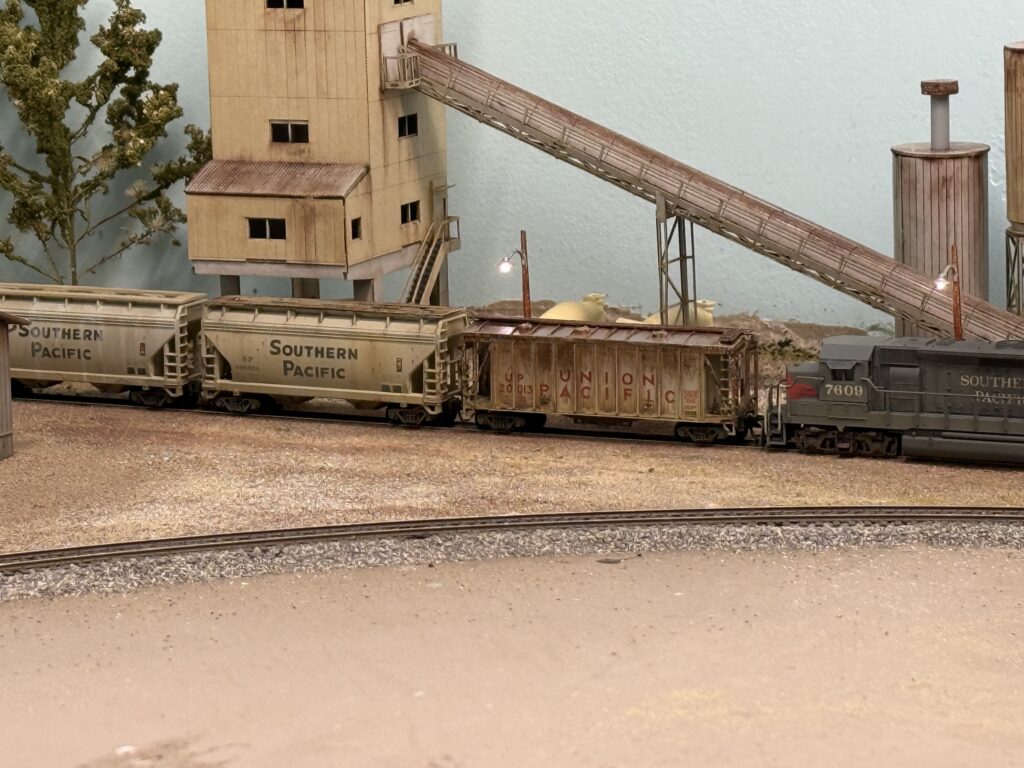
The Burbank Branch in N scale

Switching layout inspired by the Southern Pacific Burbank Branch in N scale

Progress

The end of the Southern Pacific Burbank Branch N scale layout

I know it feels way too soon to end the Southern Pacific Burbank Branch N scale layout.

However, in August 2025 I came across an issue of Railroad Model Craftsman that I had not read yet. That issue featured Tom Johnson’s Cass County HO scale layout, and as soon as I finished the article, I was hooked.

So, I decided to switch to HO scale and create my own freelanced short line railroad. The decision to leave N scale was not easy, but several factors pushed me in that direction. First, I appreciate the overall reliability of HO track and rolling stock. Second, the larger scale is easier to work with, especially since my eyesight is not what it was twenty years ago. Finally, the sheer availability of HO scale products makes planning and building much simpler.

Buffalo Creek & Western

Then, I started planning an HO scale switching layout based on grain elevator operations in Montana in 1985. I did extensive research on short lines and grain traffic, and through that process I came up with the name Buffalo Creek & Western.
The end of the Southern Pacific Burbank Branch in N scale. Enter the Buffalo Creek & Western short line railroad in HO scale.

Sure, I enjoyed returning to the hobby in November 2024, and the Burbank Branch layout picked up right where I had left off in 2009 with my former SP Coast Line in N scale. I have always been a fan of the Espee and I probably always will, but I felt the need to work on something fresh.

Even though I have been a committed N scaler for decades, this time I wanted to give HO scale a serious try. So, I hosted a few operating sessions on the Burbank Branch and slowly refined the modeling skills that had been dormant for fifteen years.

Now, I feel ready to move on and start something new.
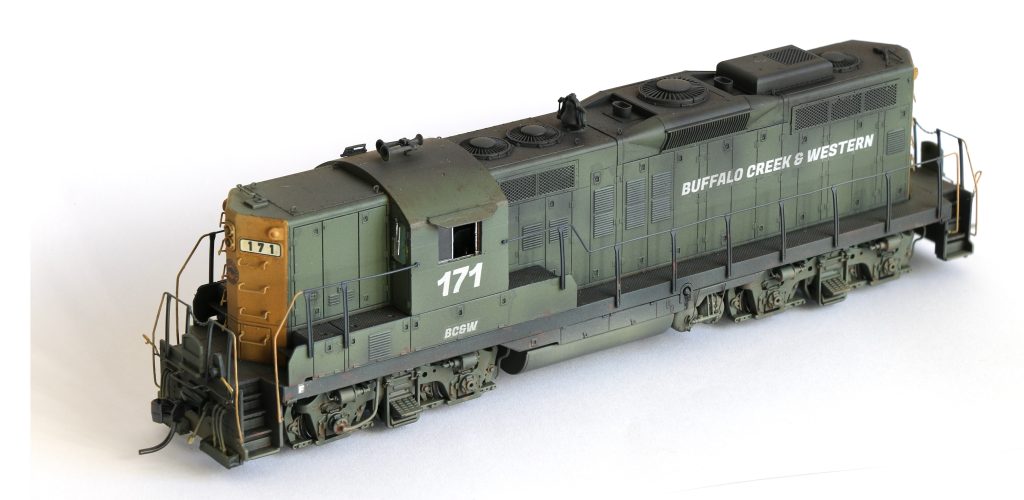
BC&W's GP9 #171, an Athearn Genesis HO scale model.

Here is the new BC&W blog, where I document the progress. There is also a YouTube channel.

So far, I have focused on rolling stock and structures. Soon, I will dismantle the Burbank Branch to make room for the Buffalo Creek & Western.
Burbank Branch Photos

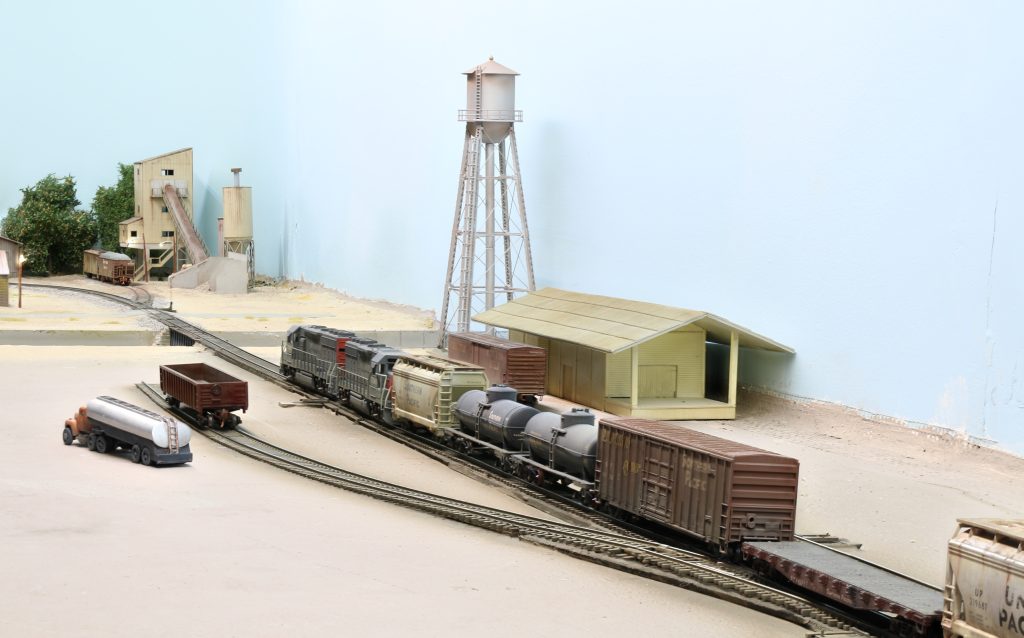
Some focus stacked pics of the Burbank Branch in N scale

I have been a Helicon Focus user for 20 years and I used it to stack photos of the SP Burbank Branch in N scale layout.

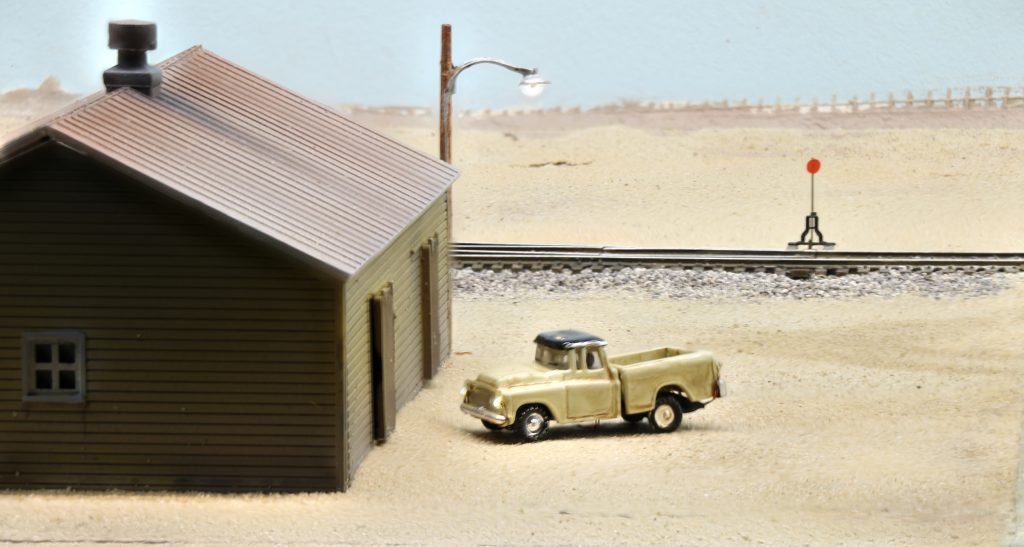
Burbank Branch Photos: pickup parked near tracks.
Overview of the Hendrick's Builders Supply
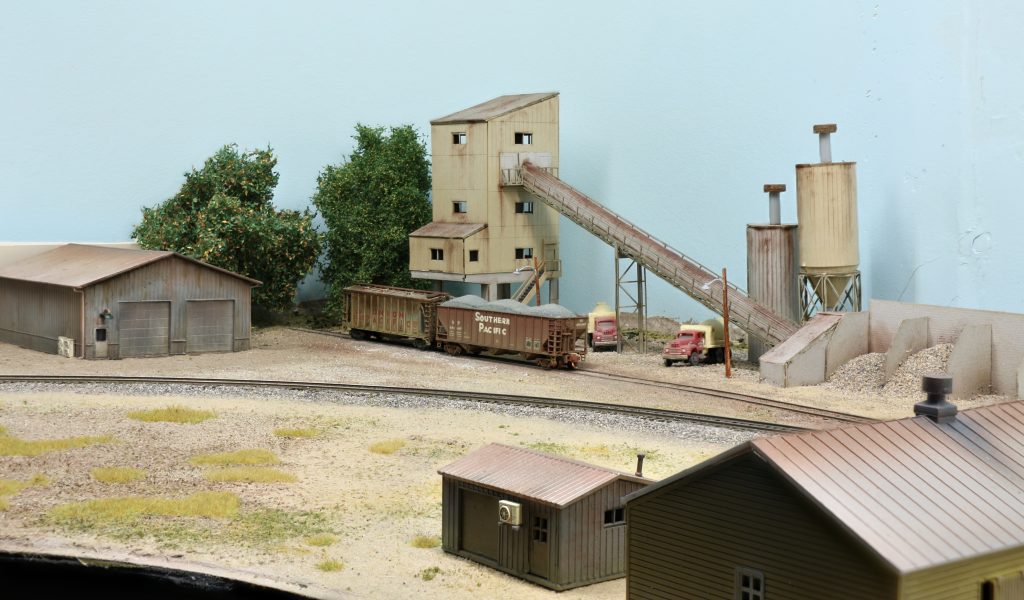
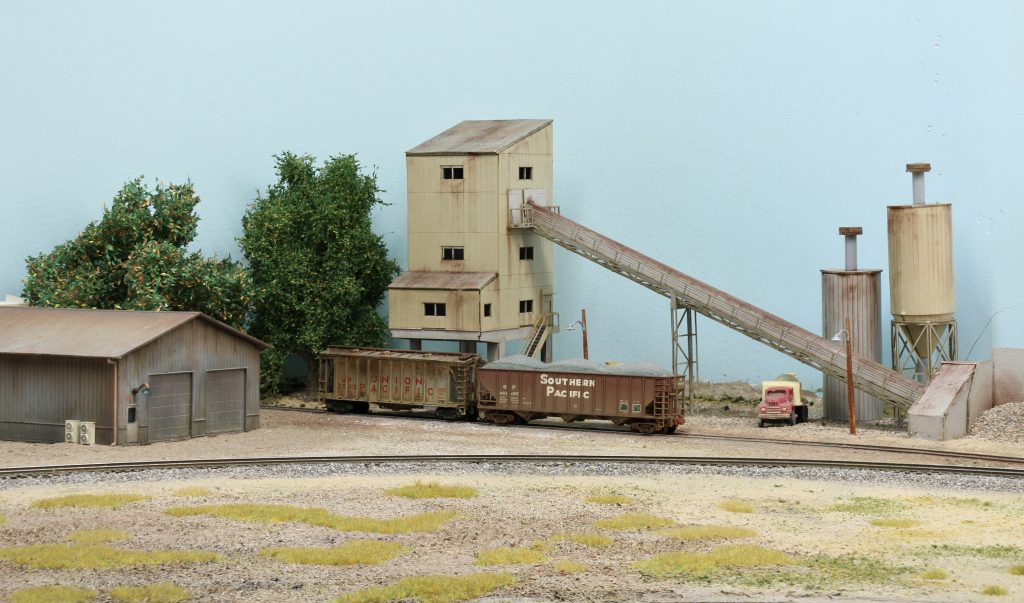
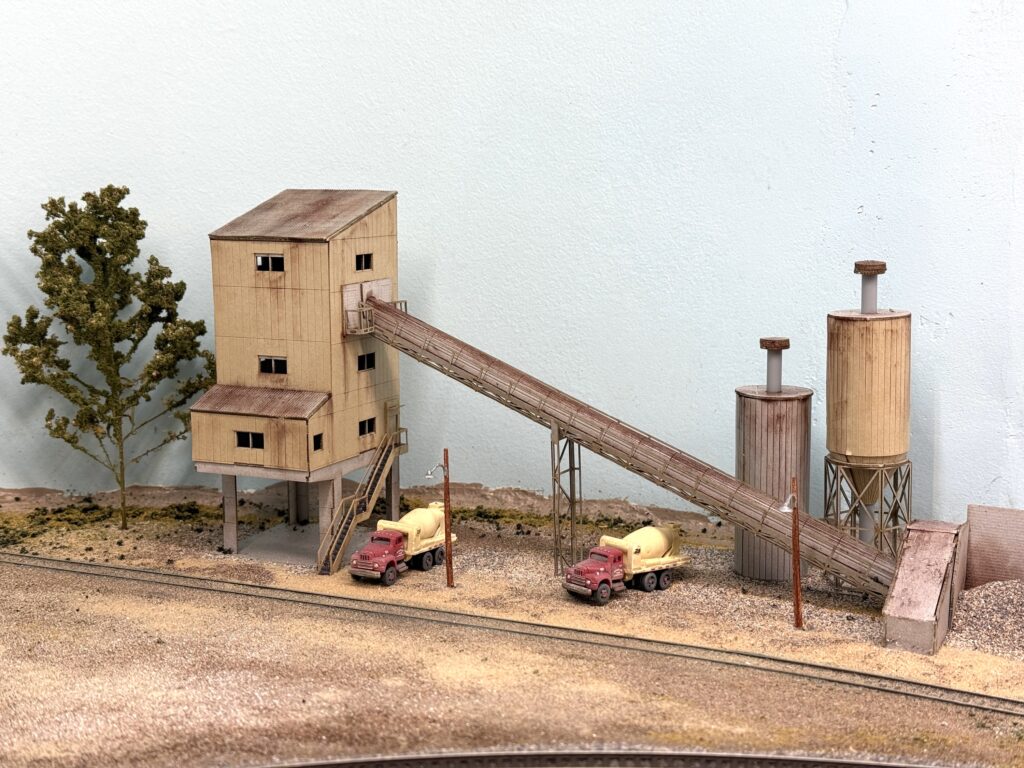
ConRock ready-mix cement plant
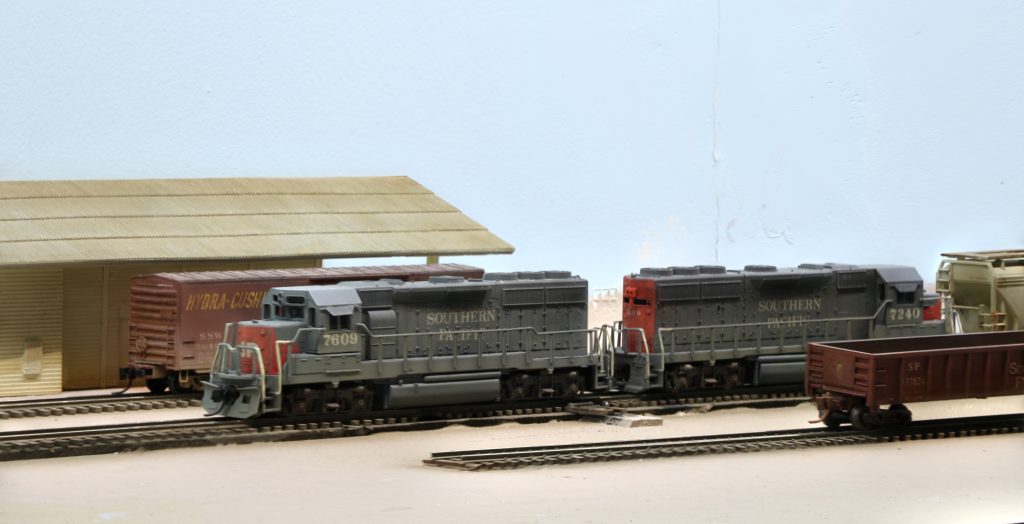
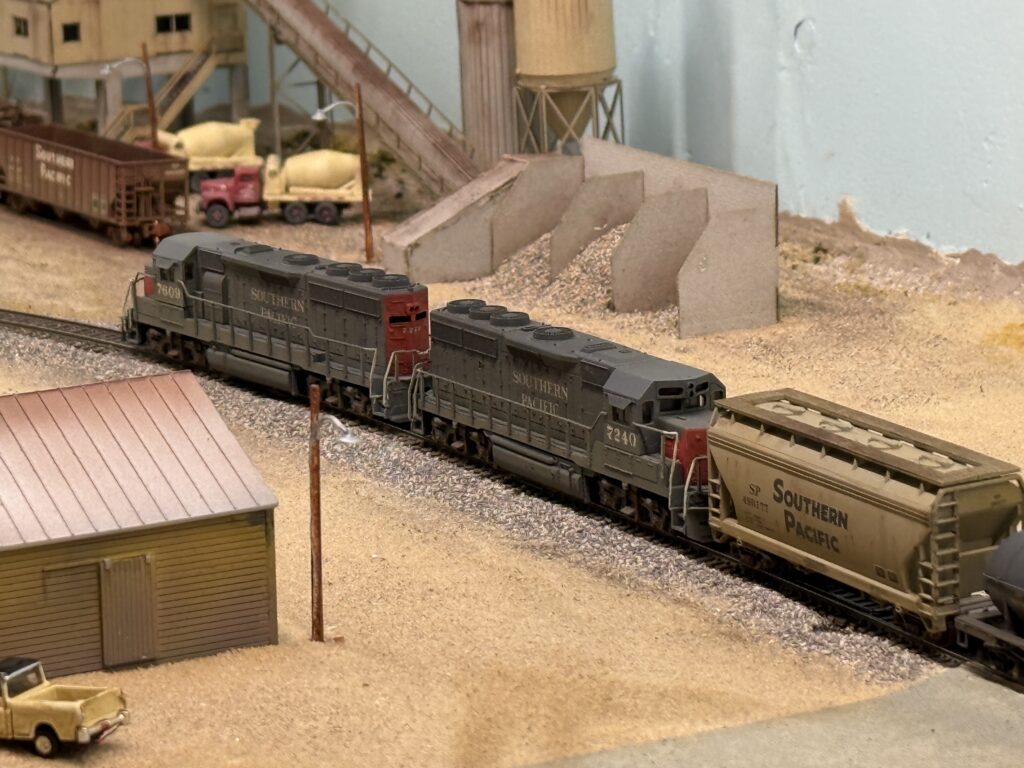
GP38-2 # 7609 and 7240 pulling a local freight train
Burbank Branch Photos: ConRock ready-mix cement plant
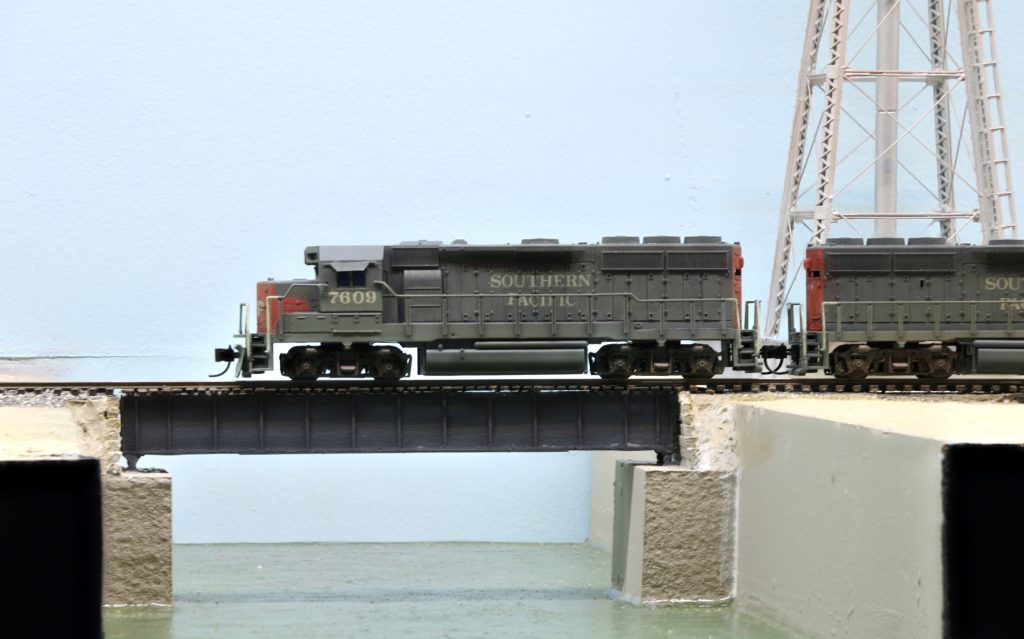
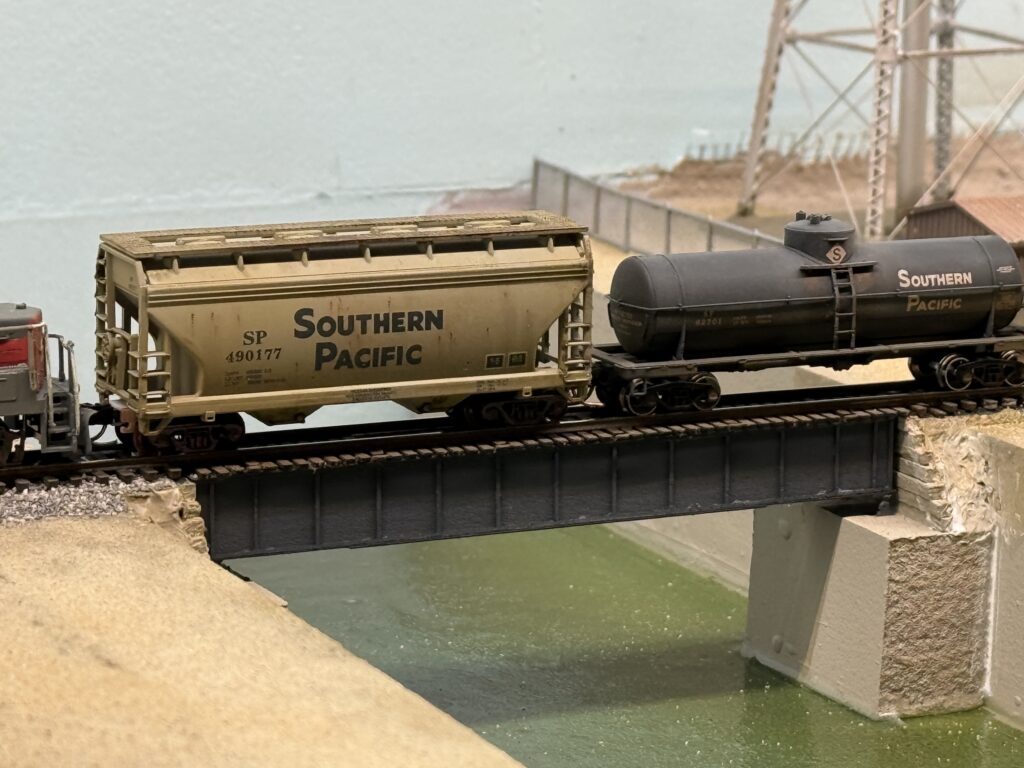
LA River Bridge

Latest Updates on the Burbank Branch

Latest updates on the Burbank Branch in N scale

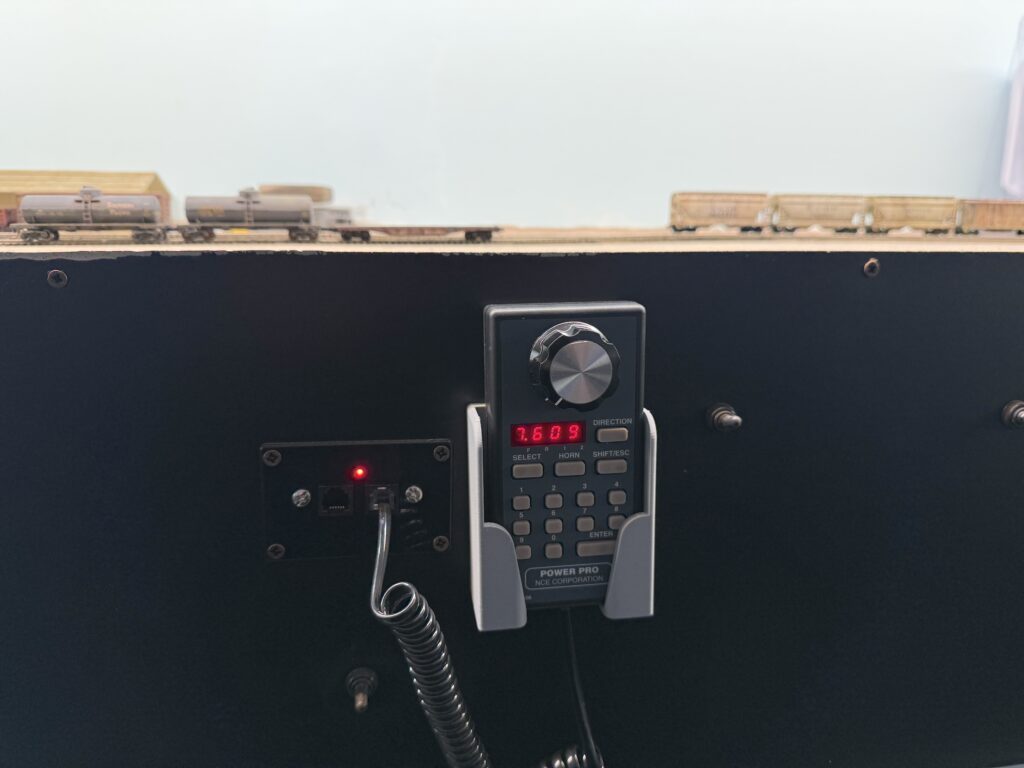
The latest updates on the Burbank Branch feature 3D printed DCC throttle holders, bridge, scenery and ops session.
Latest Updates on the Burbank Branch: 3D printed throttle holder
LA River bridge scene

Following is the ConRock Ready Mix Cement Plant, the first scene I started scenicking on the layout. It is far from 100 percent complete, but it already gives a much more satisfying look during switching sessions compared to bare plywood.
ConRock ready-mix cement plan
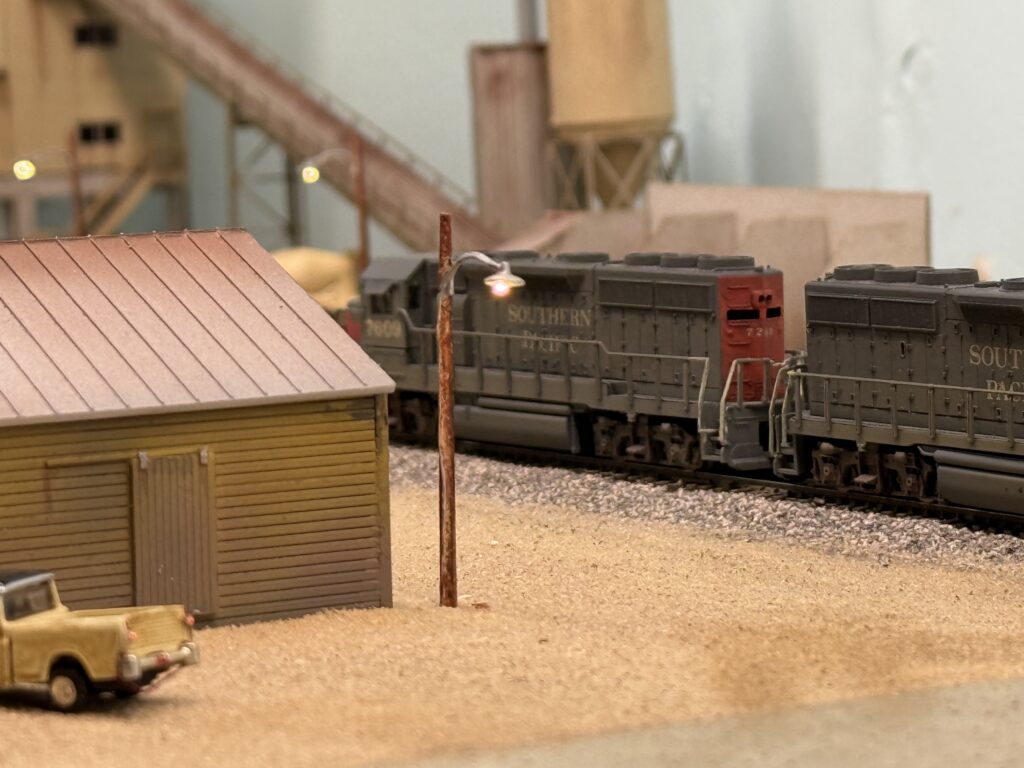
Woodland Scenics light pole
Latest Updates on the Burbank Branch: new trees

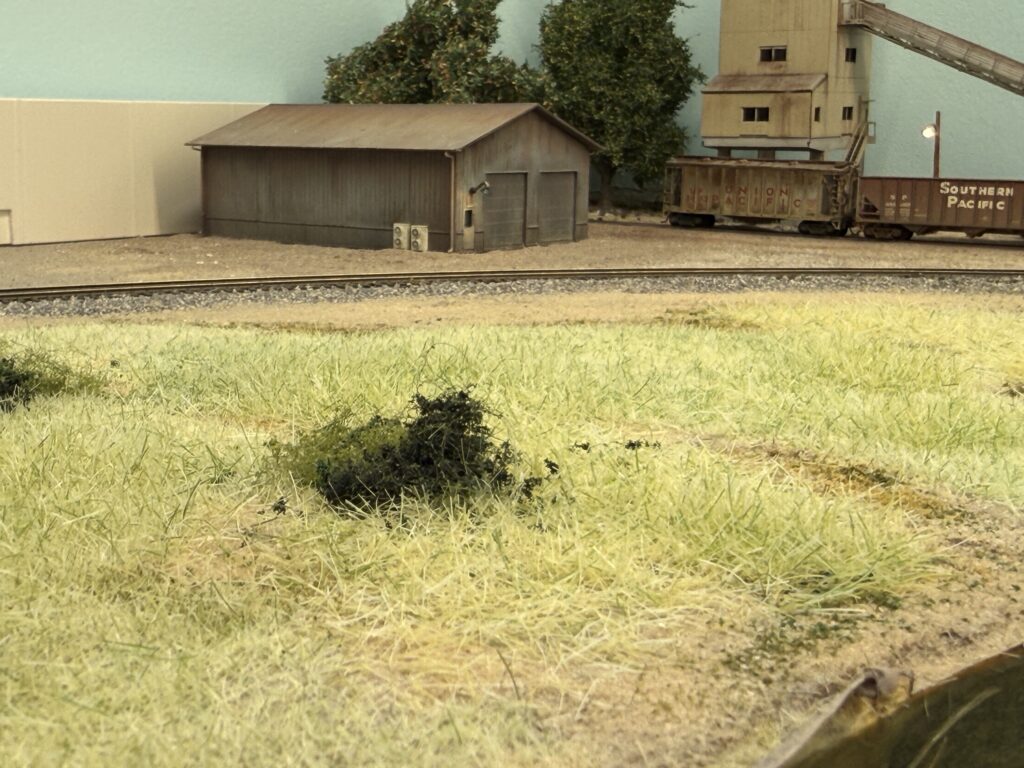
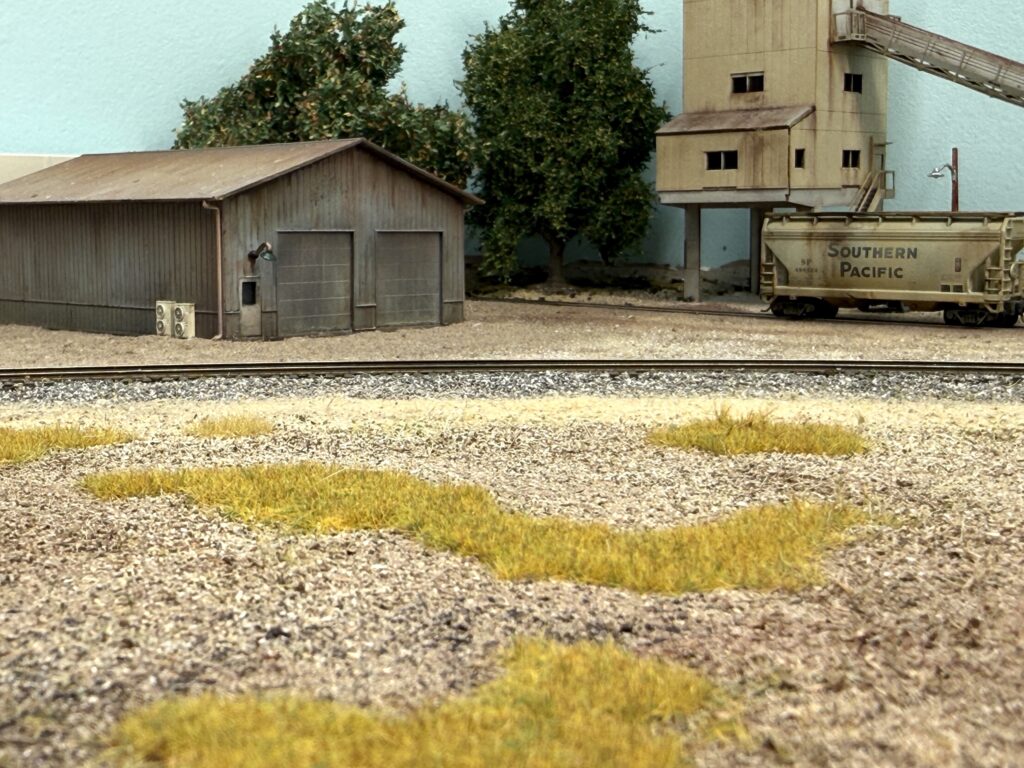
I was not completely satisfied with the static grass. The color mix looked too light and too green, so it felt unrealistic to my eye. So, I removed it and started over with different products.

Latest Updates on the Burbank Branch: static grass

Then, I purchased WWScenics static grass from the UK and found their product very good in terms of both application and color tone. Here is the first layer of 2 mm Wild Meadow static grass applied over terrain made from real dirt and Noch brown “Streumaterial” item no. 08441.

WWScenics 2mm static grass

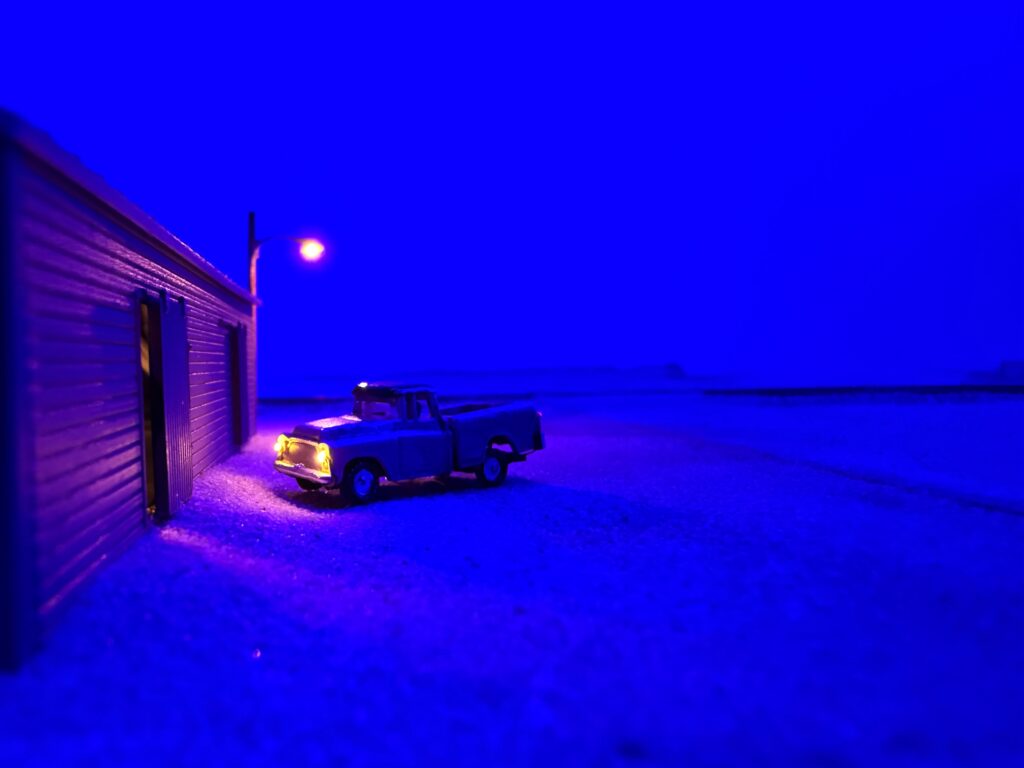
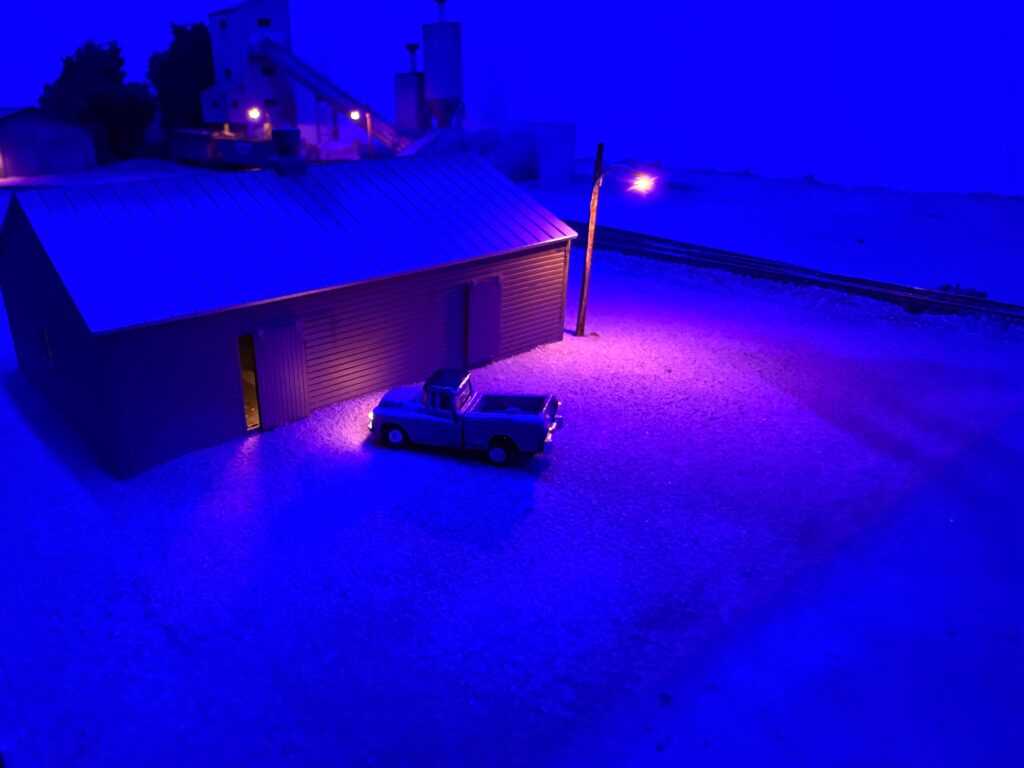
I also added a Woodland Scenics lighted vehicle, which adds a nice touch of realism to night scenes.

Lighted pick-up truck
Latest Updates on the Burbank Branch

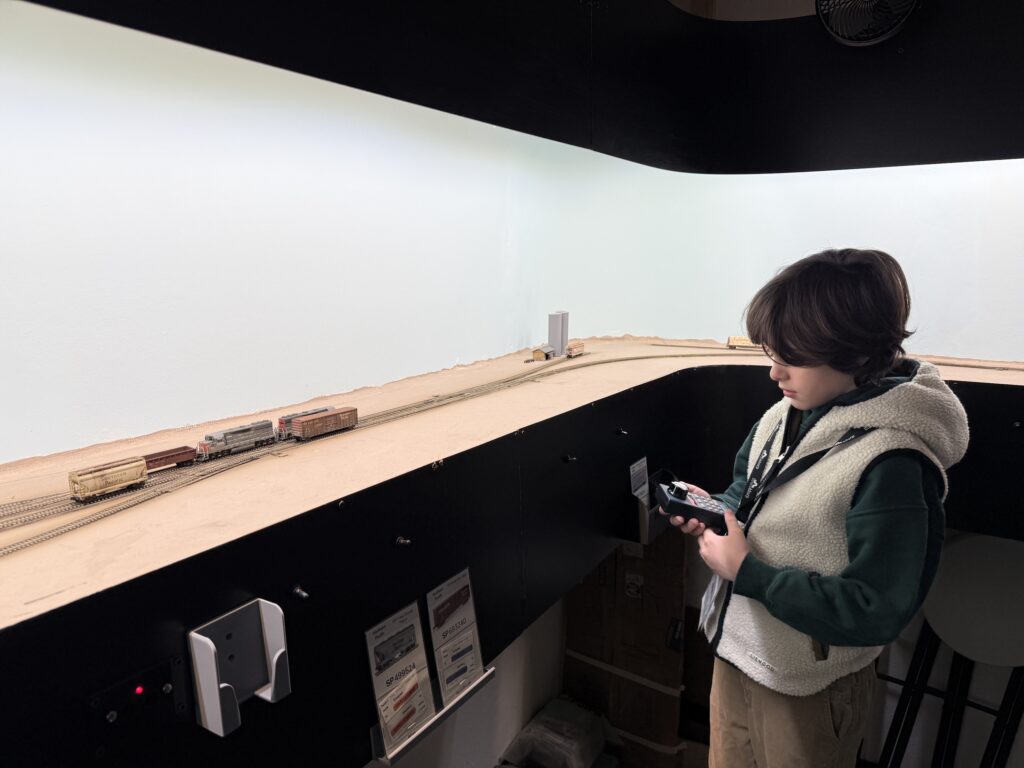
Here, my seven-year old son took the engineer role. We switched a few cars using a consist of two custom painted Atlas GP38-2 units.

Operating session

Structures and Scenery Update

Some new structures and scenery update on the SP Burbank Branch in N scale

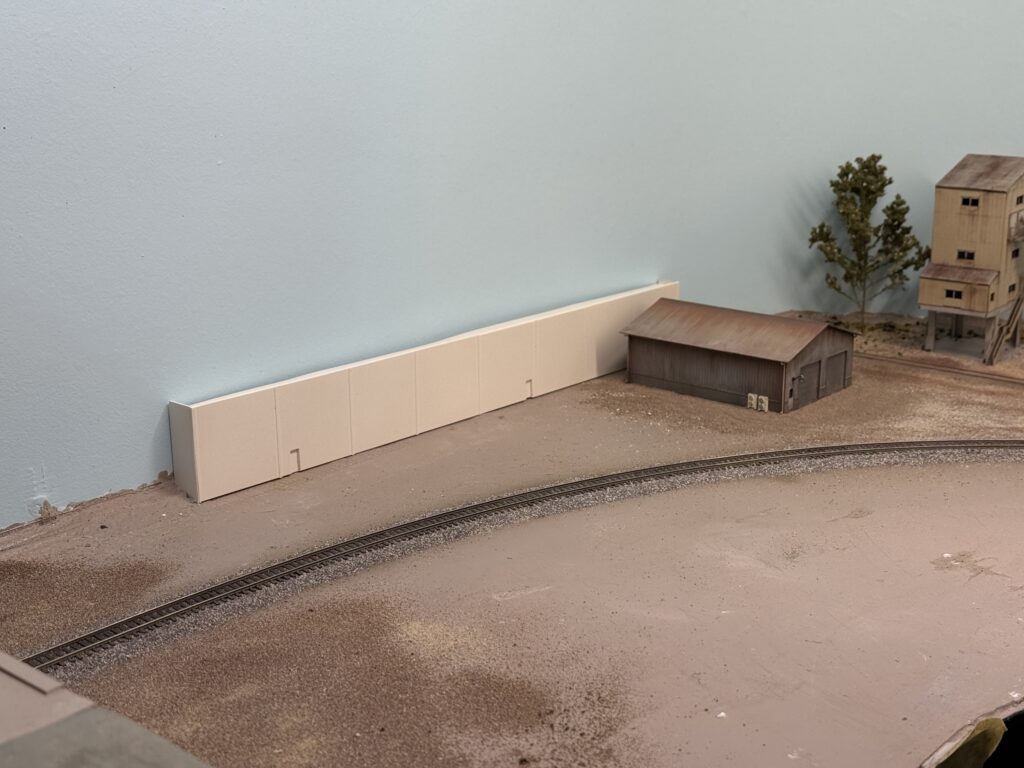
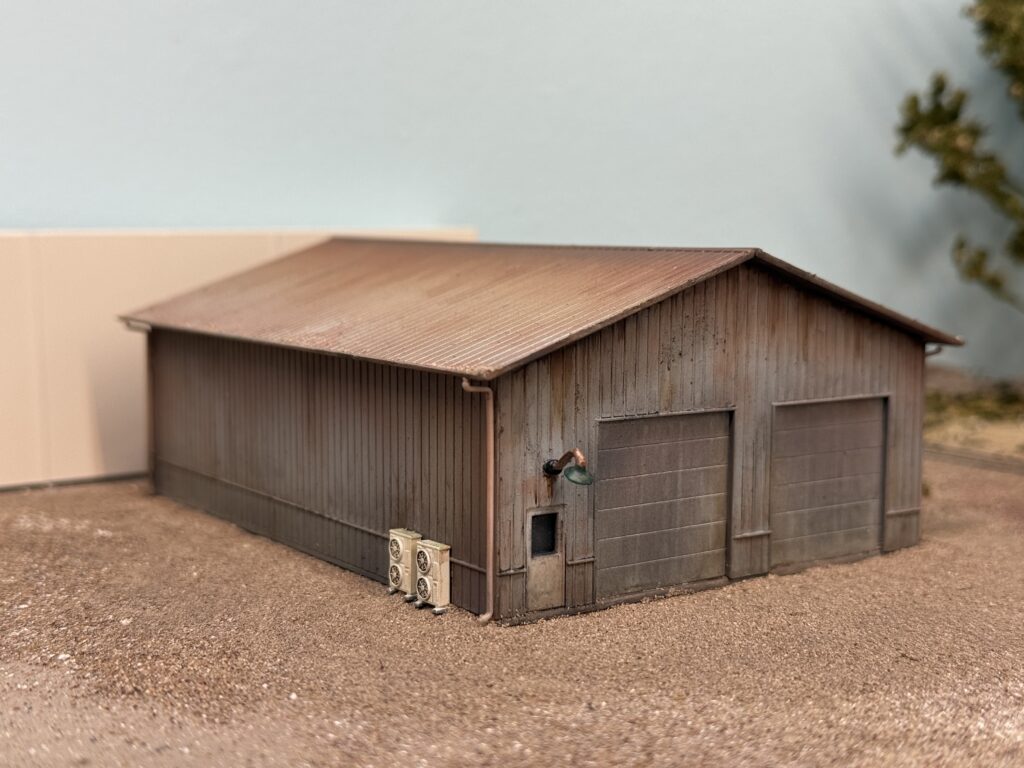
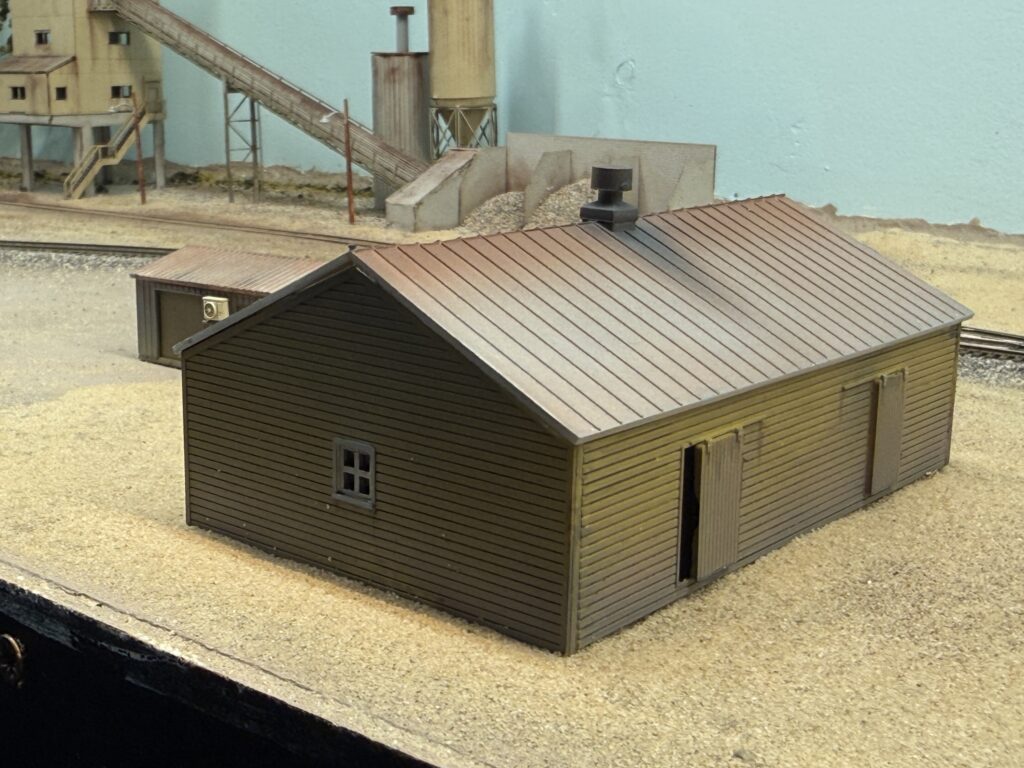
New structures and scenery update on first section of the layout to receive full scenery. I assembled, painted, and weathered several buildings to serve as warehouses or general industry-related structures.

I used Walthers kits as well as a scratchbuilt building flat from styrene to add a bit more depth to the backdrop. I also finished the bridge over the LA River.

Structures and Scenery Update

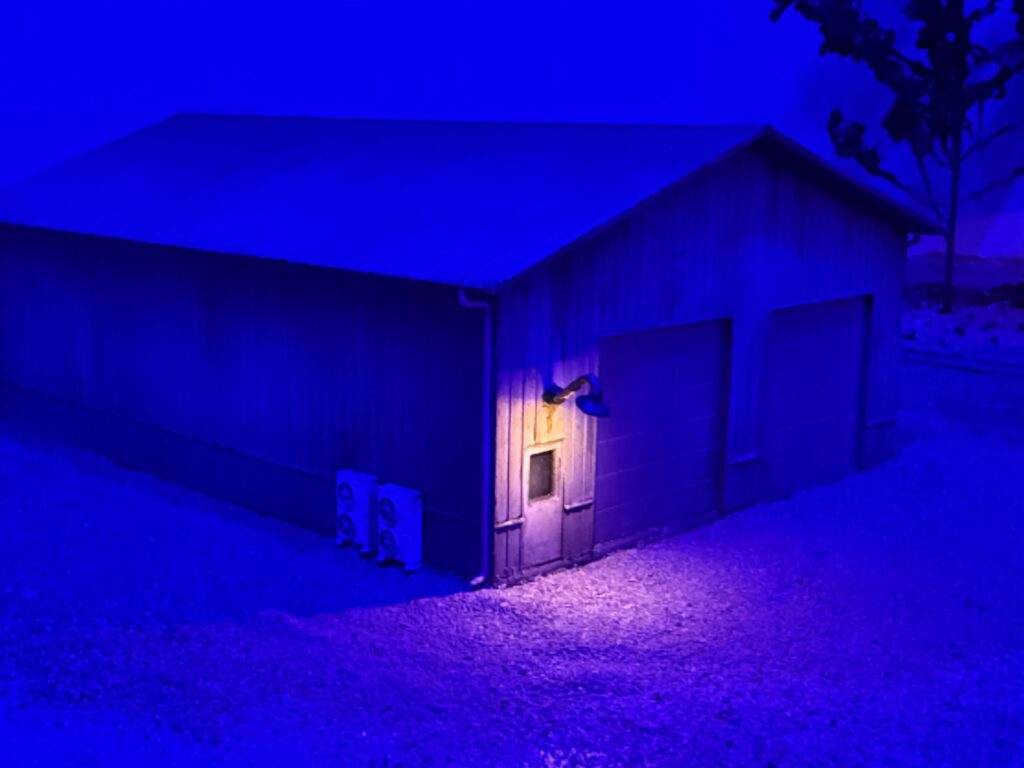
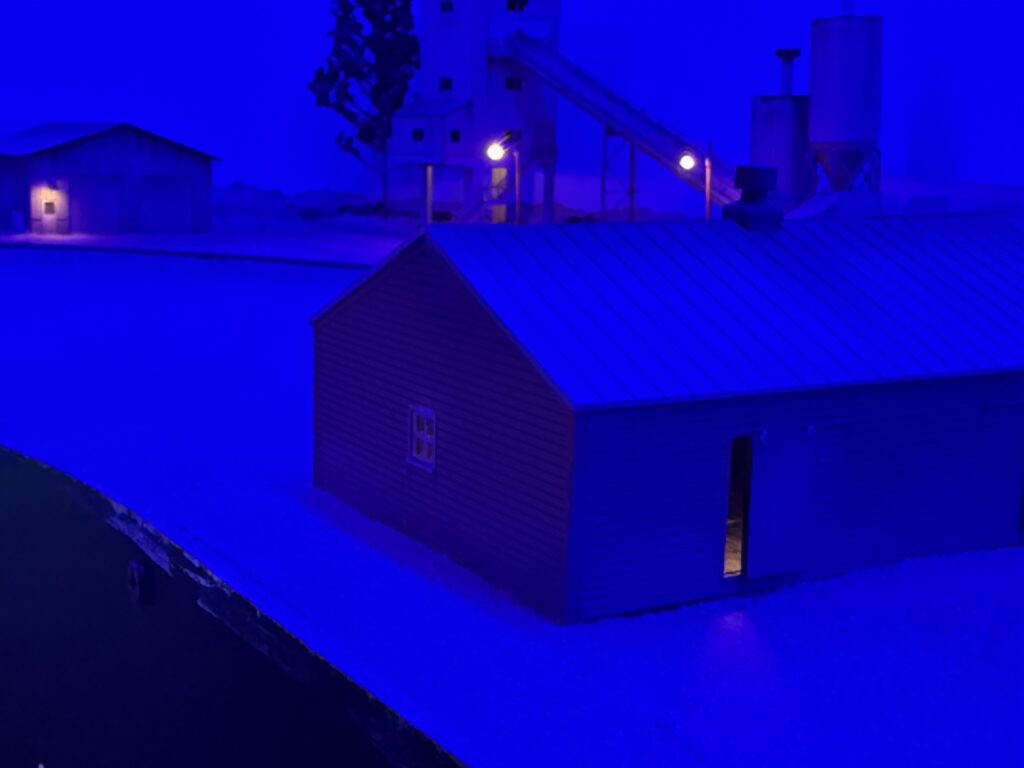
Then, I added lighting with small LEDs and Woodland Scenics goose lamps to make the night scene more interesting and realistic.

Industrial structure
Industrial structure: night scene
Structures and scenery update
Structures and scenery update - night scene

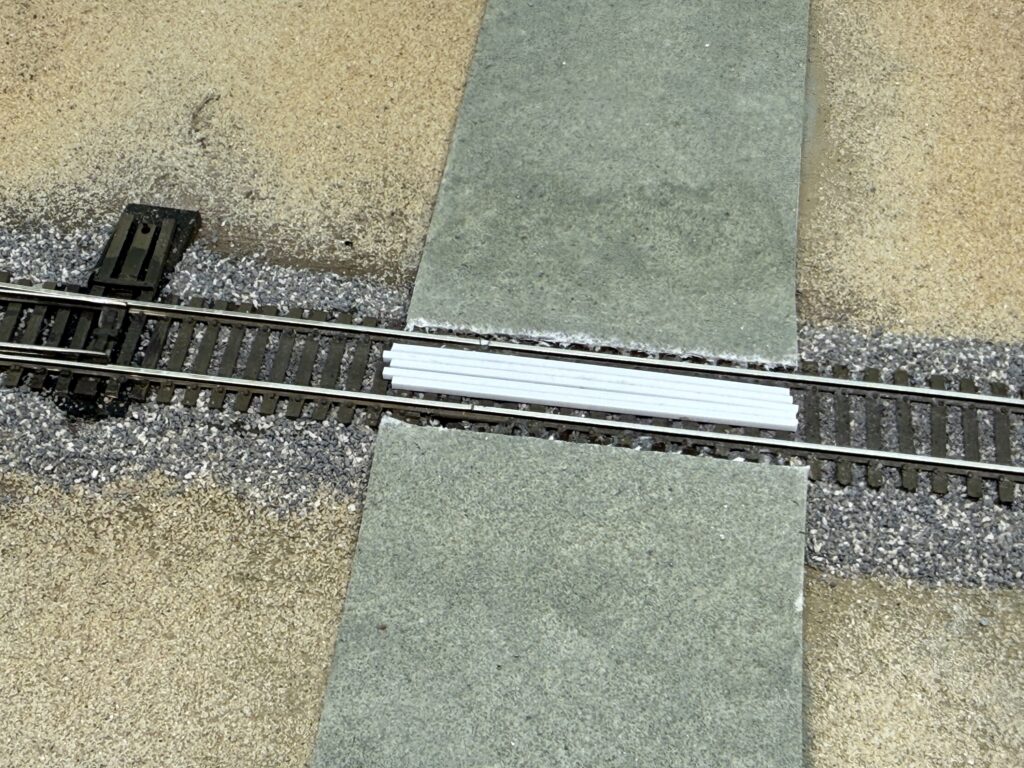
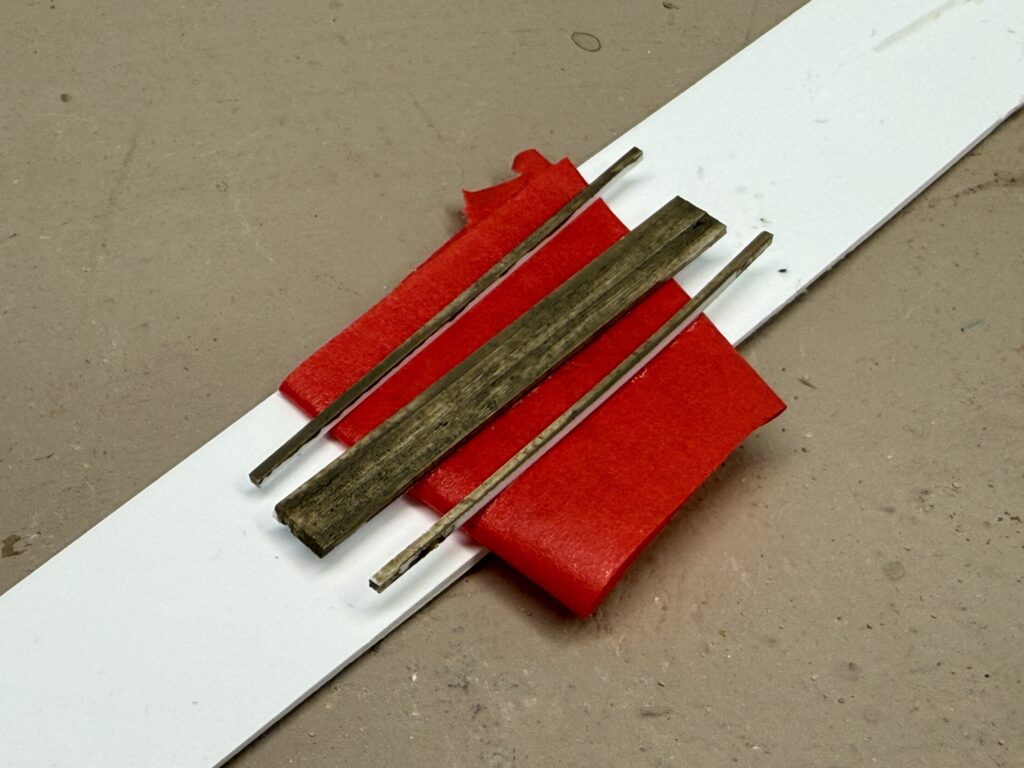
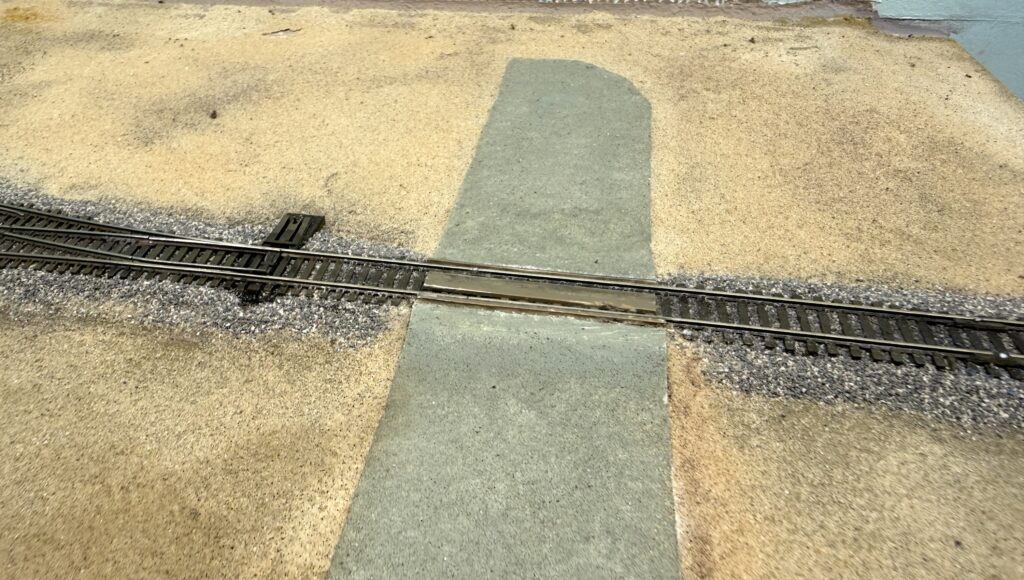
In addition, I used styrene strips to build a wood grade crossing. I hand-painted the styrene with a mix of gray and brown acrylics. Then, I sealed everything with a coat of flat clear from a spray can.

Wood grade crossing made out of styrene
Wood grade crossing painted
Grade crossing

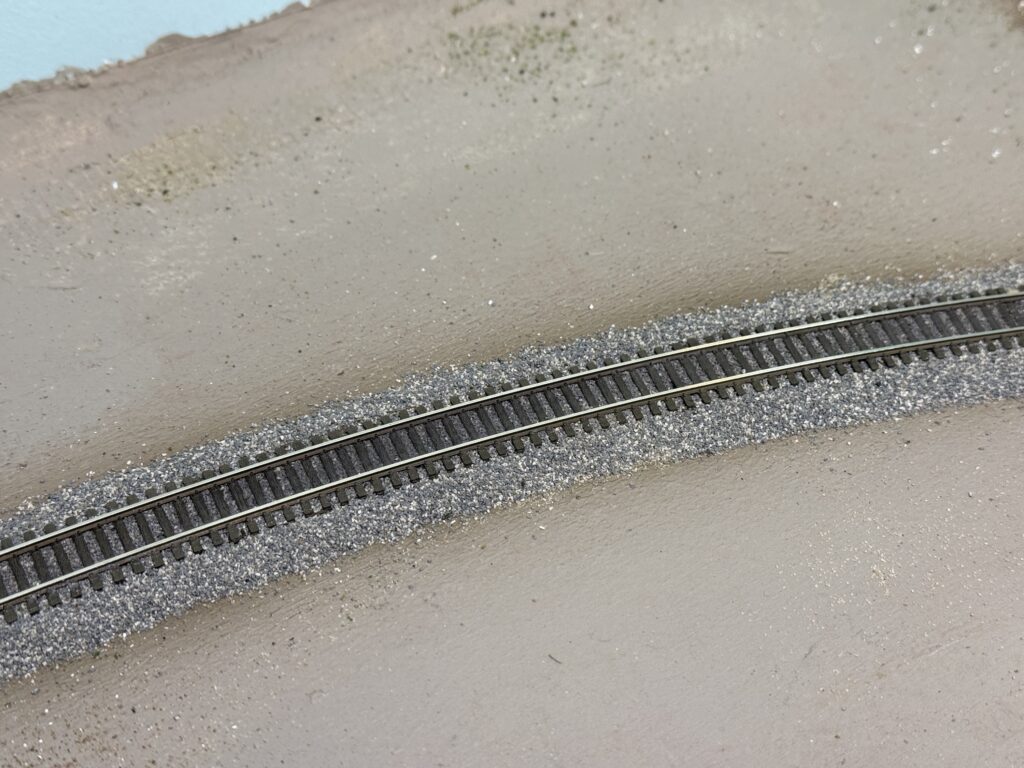
Furthermore, I weathered the area between the rails using powdered pigments mixed with plaster of Paris. Then, I and applied the mix on the track with a flat brush. Finally, I misted the area with water so the plaster would set and seal everything in place.

Weathered track
Structures and scenery update: track weathered with pigments and plaster of Paris

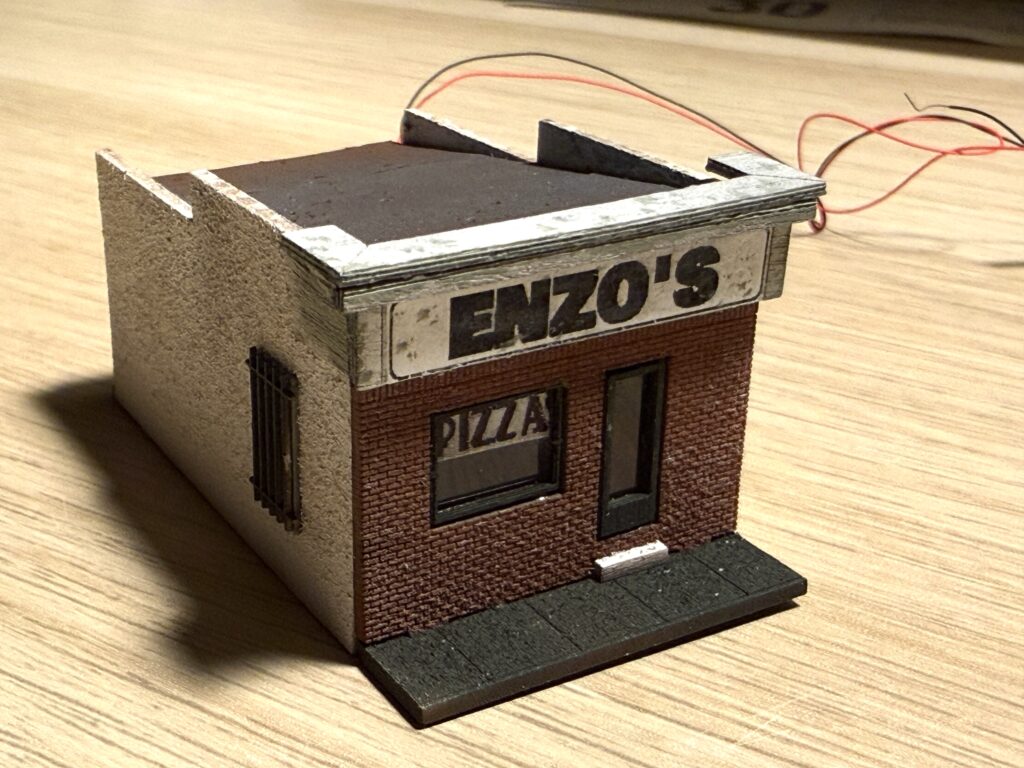
Enzo’s Pizza

Enzo’s Pizza is a structure I will install on the Burbank Branch in N scale to honor the late Enzo Fortuna.

I built Enzo’s Pizza from a Blair Line kit. The kit represents Pizzaland in Chicago, Illinois, but I chose to rename it and place it on my N scale Burbank Branch layout.

Enzo's Pizza

The name honors the memory of Enzo Fortuna, a friend of mine who passed away on March 19, 2025. Enzo was a Southern Pacific N scale modeler whose layout depicted the beginning of the SP Coast Line, roughly from San Francisco to Santa Cruz. Unfortunately, he never had the chance to complete it.

We shared a passion for N scale, the Southern Pacific, and realistic operations. We were both members of FREMO in Italy, and we operated several times on the Italian N scale FREMO modular layout.

Enzo’s Pizza is my way of actively remembering him through modeling. I am sure he would have loved it.

Installing a Bridge

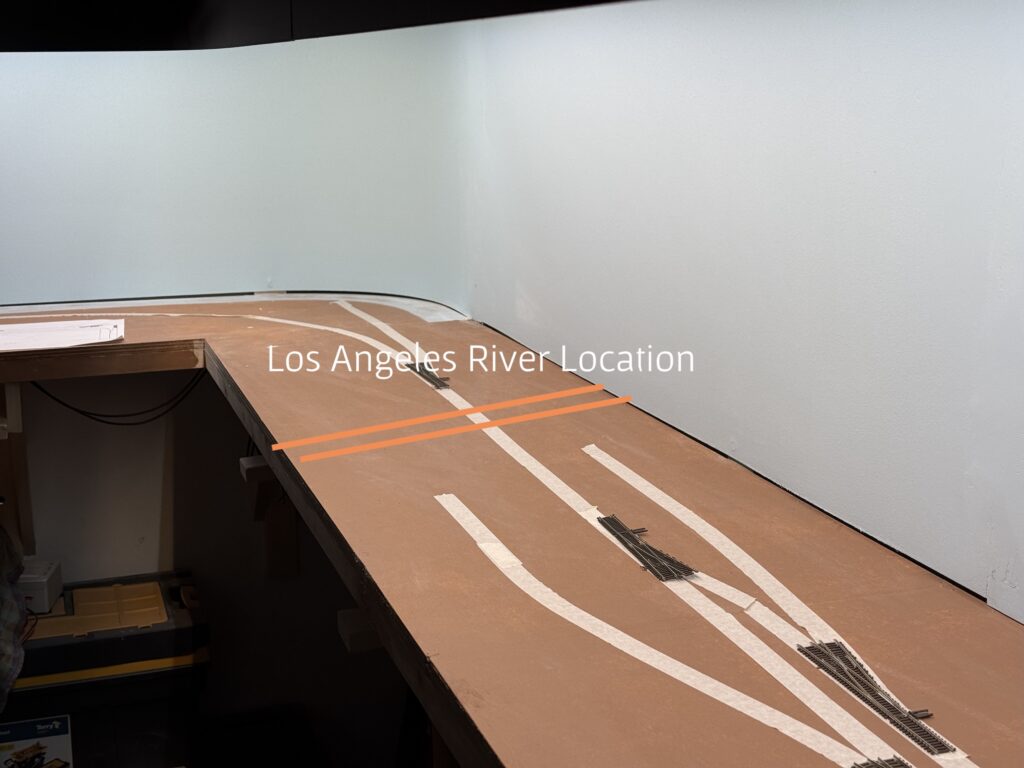
Installing a Bridge over the Los Angeles River

Installing a bridge over the Los Angeles River was high on my list, since river bridges have always fascinated me in model railroad layouts. In addition, bridges are a great way to add vertical variation to an otherwise flat urban setting, especially on a layout like the Burbank Branch in N scale .

Cutting Benchwork

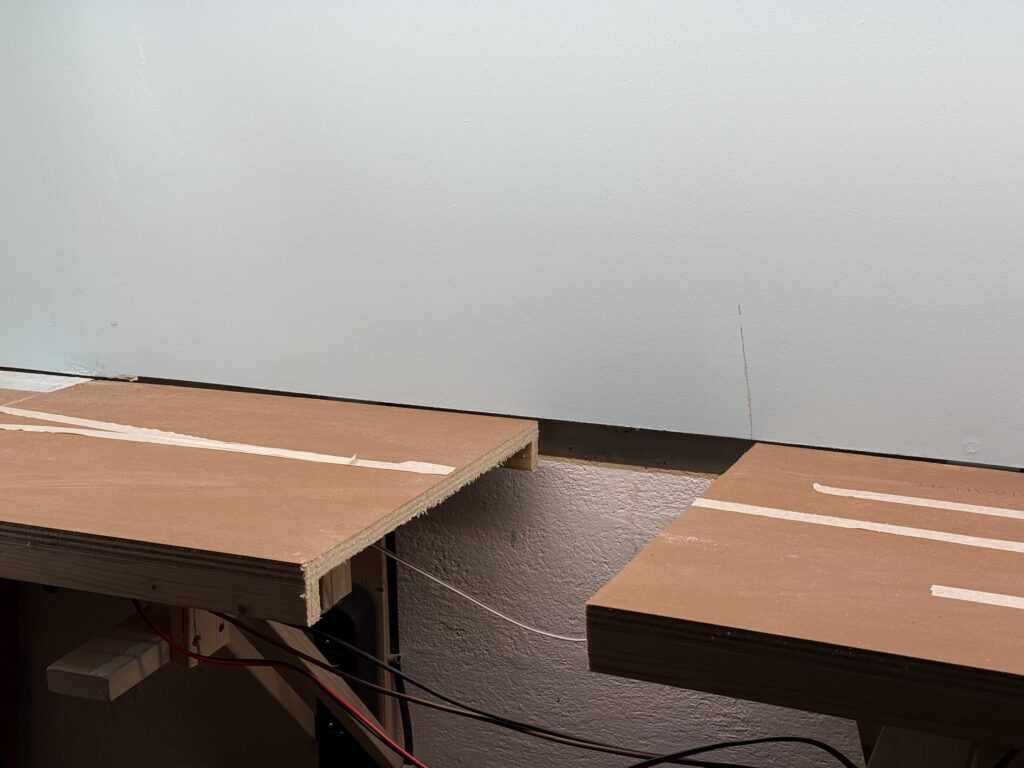
I started by measuring and cutting the plywood subroadbed support of my N scale layout.

Installing a bridge over the Los Angeles River
Cutting the benchwork

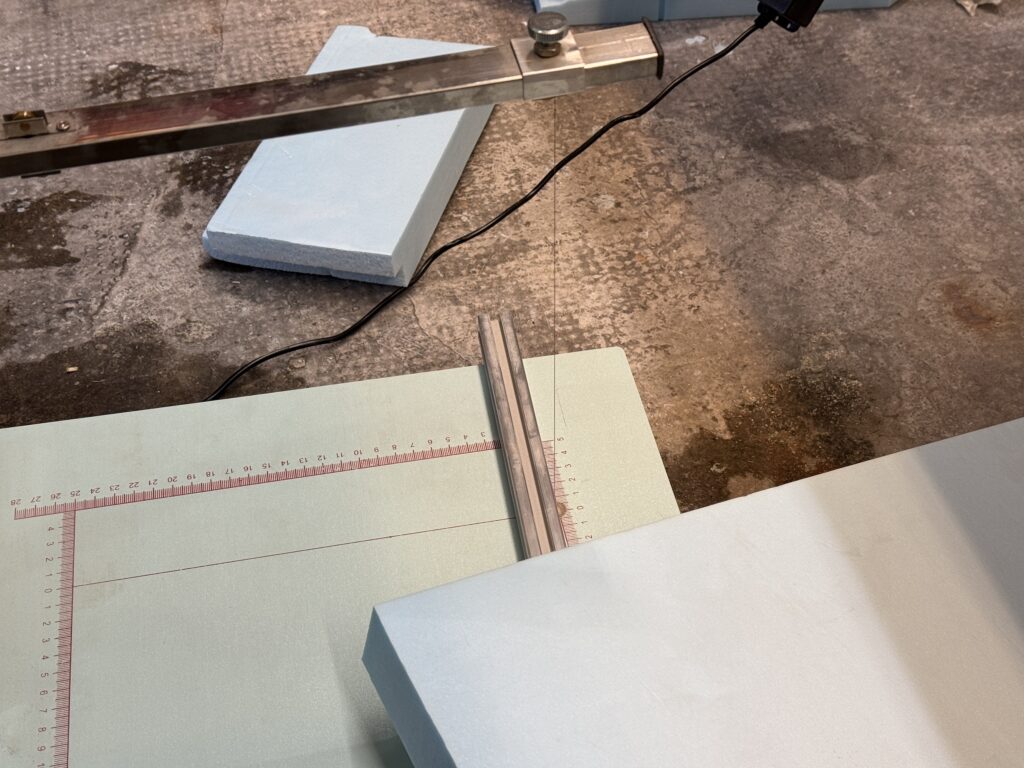
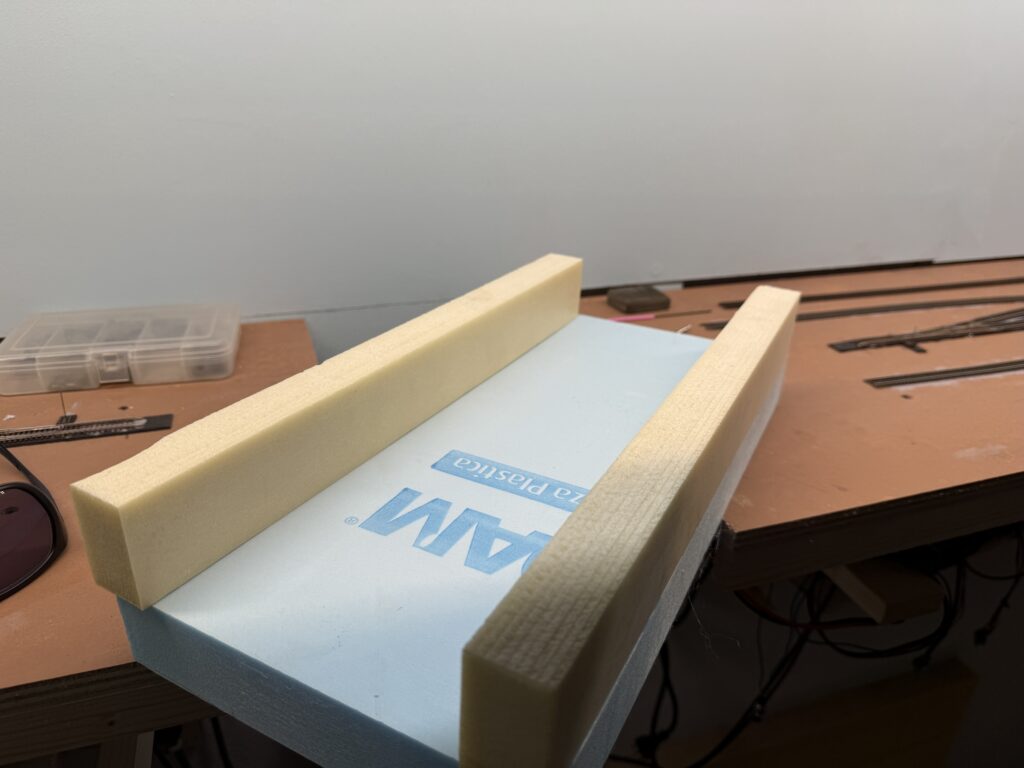
Then, I used styrofoam to shape the riverbed and the riverbanks, cutting it with a hot wire cutter.

Cutting foam with a hot wire cutter.

I glued the riverbanks to the riverbed with acrylic glue.

Installing a bridge: riverbed and riverbank made out of foam board.

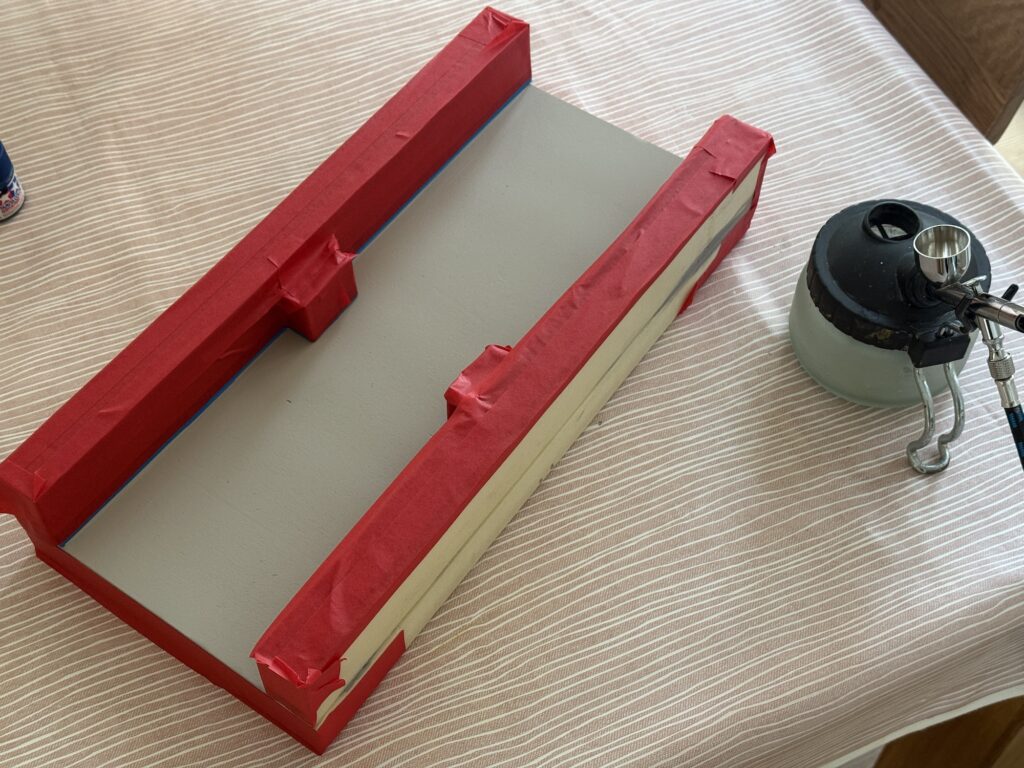
Next, I applied a few coats of ultra-flat gray spray paint to seal the foam and create a solid base for the final color, and masked the banks.

Installing a bridge: Painting the foam riverbed and river banks gray

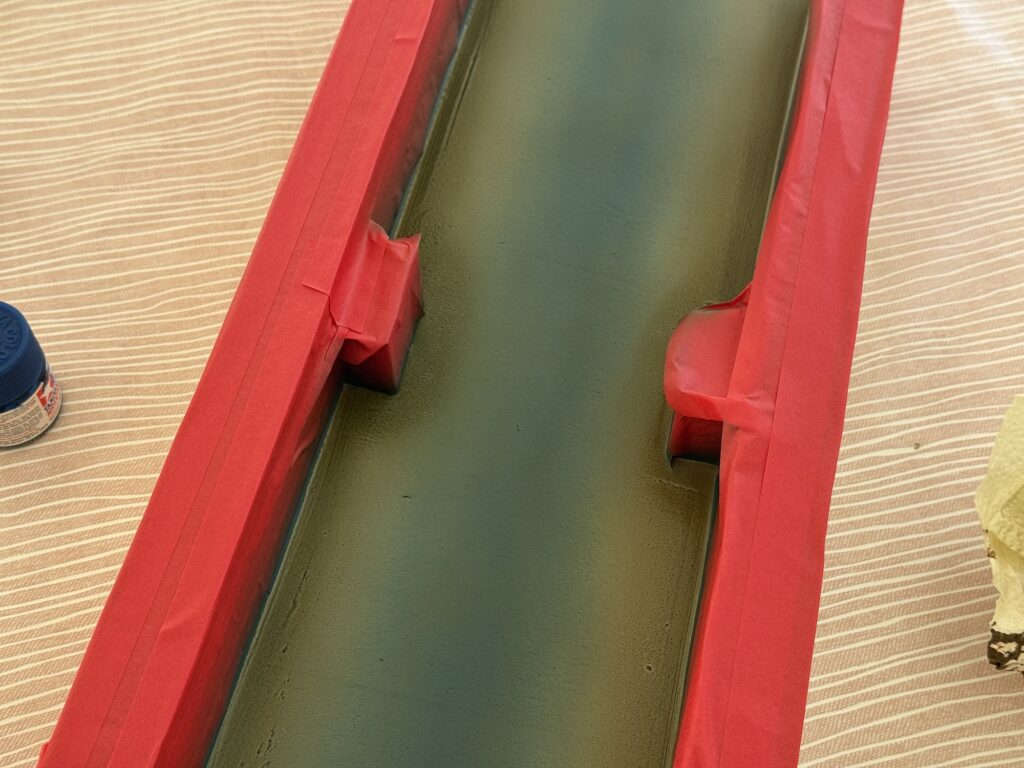
I started painting the riverbed with a coat of Tamiya XF-8, then I progressively added light layers of Vallejo Camouflage Medium Brown (71.038), and Vallejo Light Green Chromate (71.006) to get some variation close to the riverbanks.

Painting the riverbed

I painted the concrete riverbanks with a flat gray finish using an inexpensive spray can.

Expoxy Resin Water

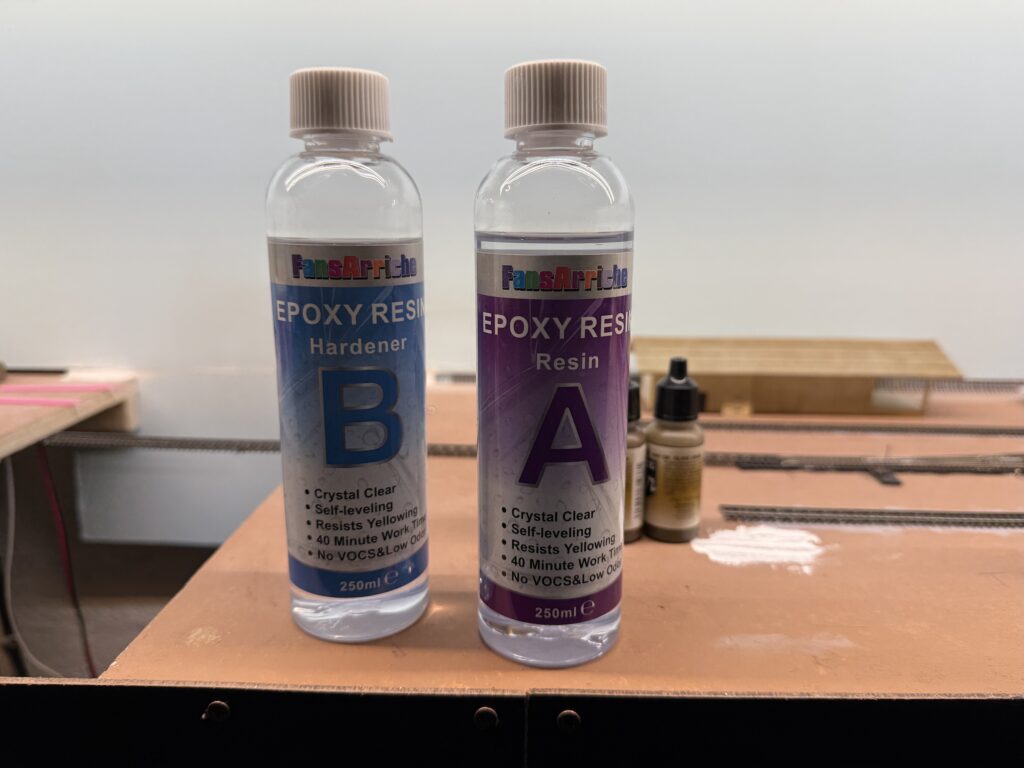
The riverbed and riverbanks are now painted. Therefore, they are ready for a layer of 2-part epoxy resin to achieve a realistic water effect.

Installing a bridge: 2-part epoxy resin.
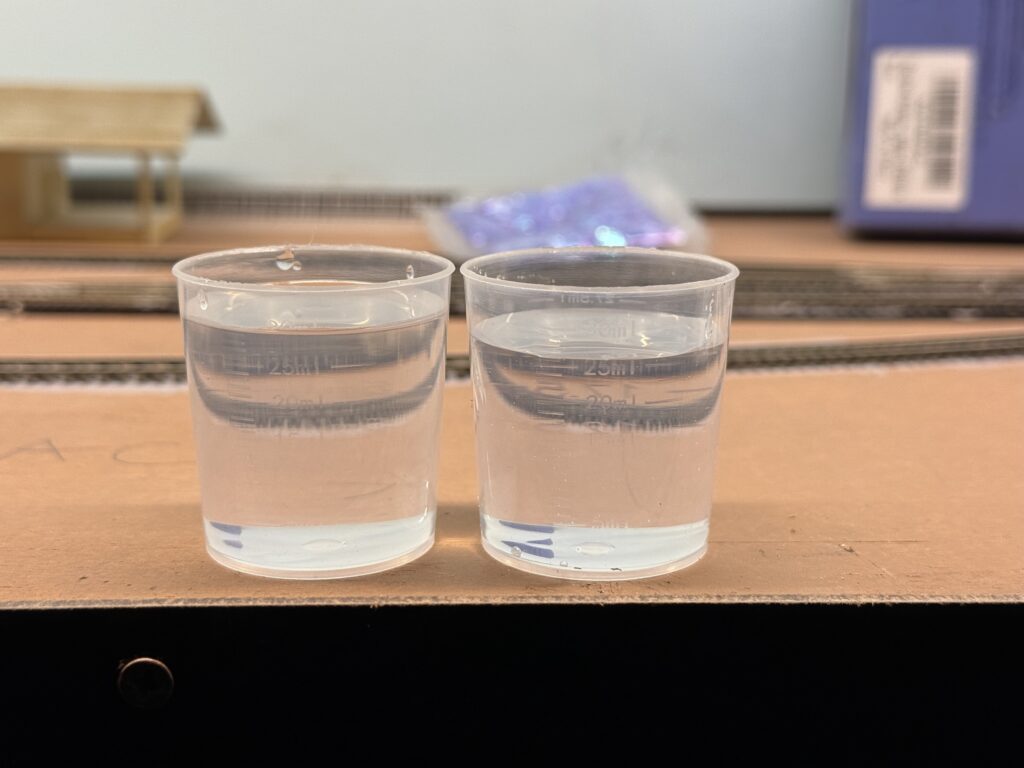
2-part epoxy resin cups

Always wear protective gloves when handling resin. After all, that material is incredibly sticky!

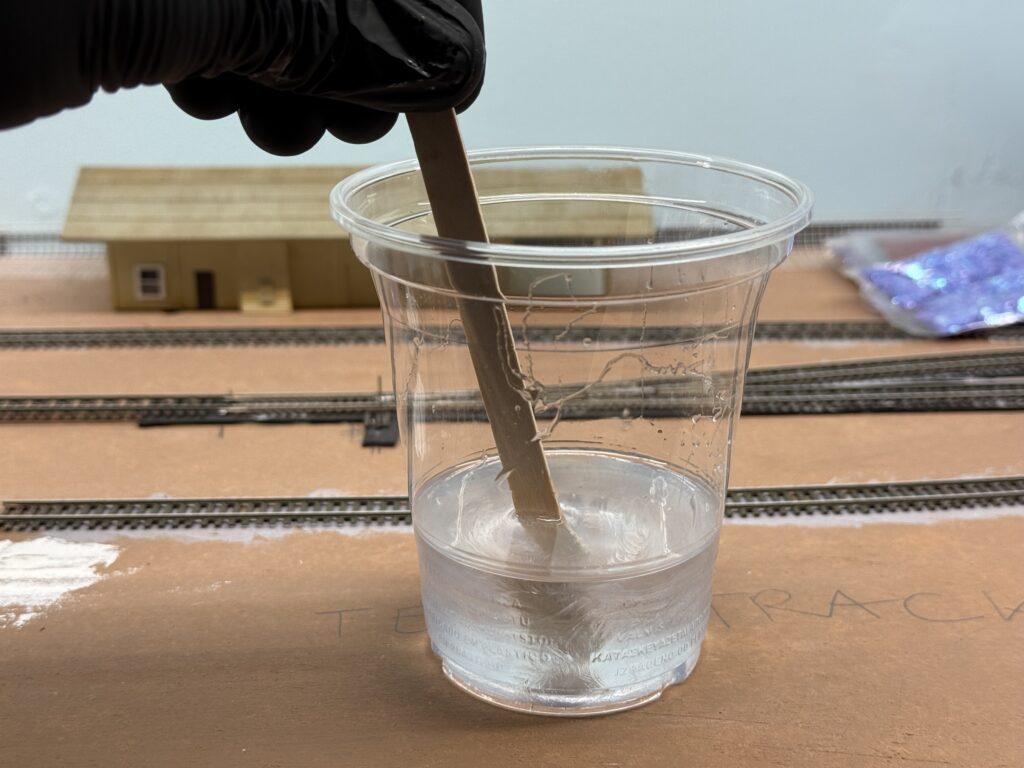
Mixing the 2-part epoxy resin.

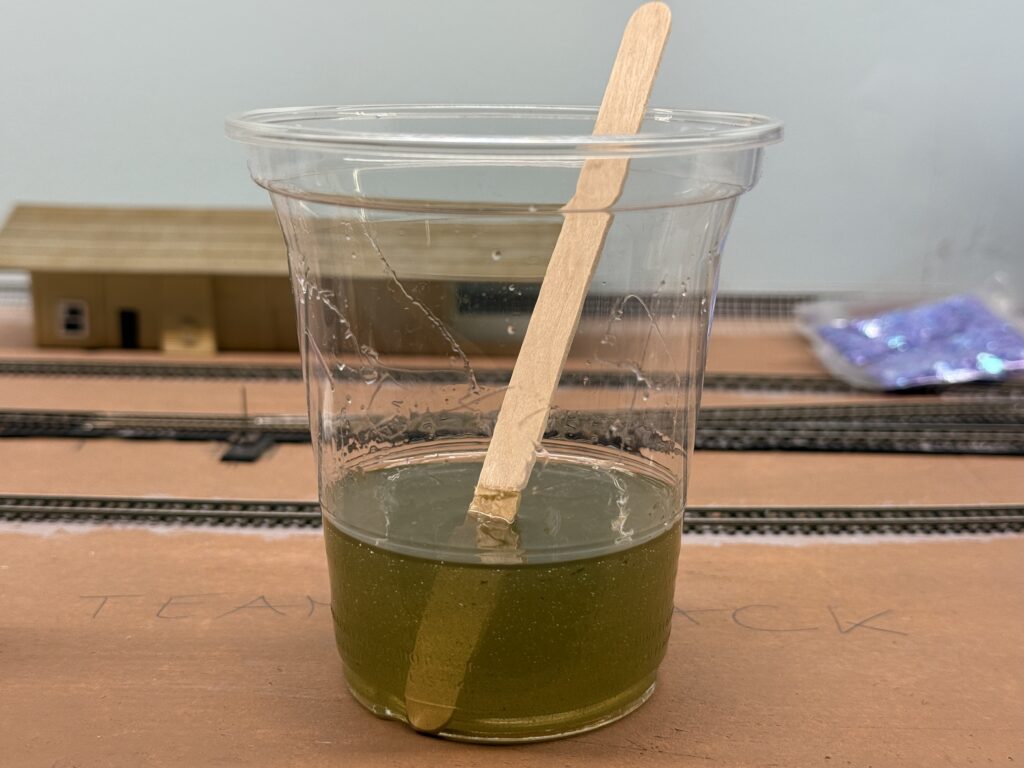
Additionally, I incorporated a few drops of Vallejo Dark Olive Drab (71.316). This gives the water a subtly greener, more natural appearance.

Adding drops of Vallejo Dark Olive Drab to the resin mix.

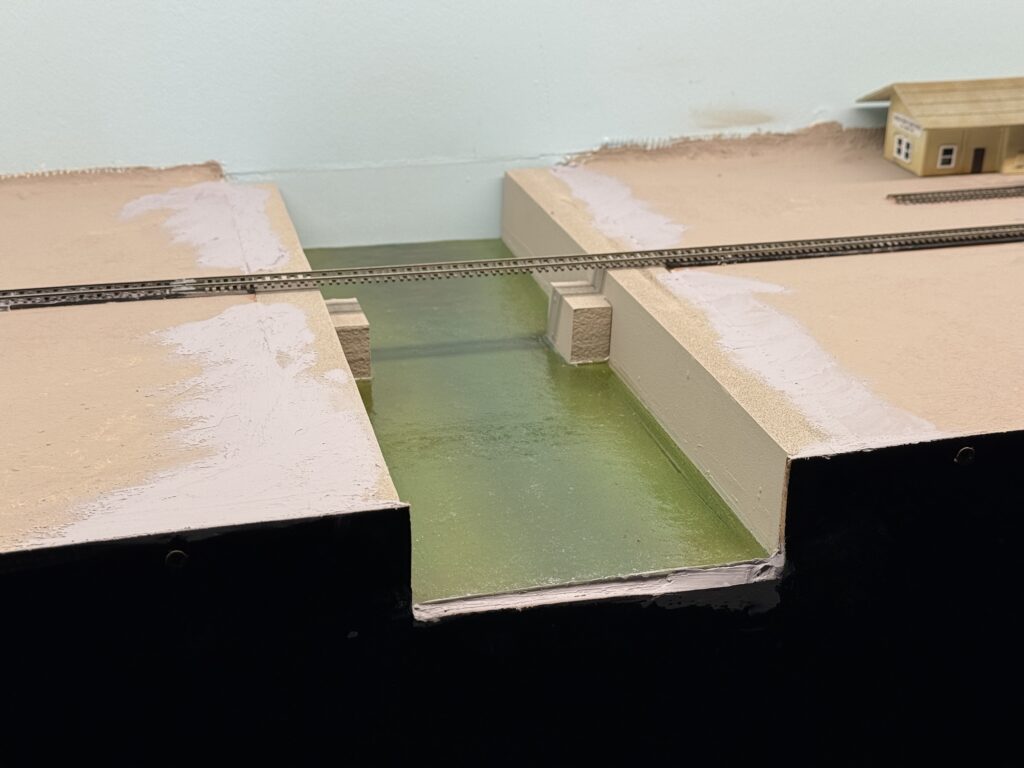
Once the resin had cured, I painted some subtle wave effect using Liquitex Gloss Medium. Then, I installed the riverbed in its final position on the layout. To ensure a perfect fit, I first test-fitted the riverbed and then marked the cutaway along the fascia with a pencil.

Subsequently, I cut the fascia accordingly with a saw. I then used a rasp and a file to fine-tune it.

Finally, I glued the riverbed to the benchwork. Following this, I applied a layer of putty to smooth out the joints, creating a seamless transition.

LA River

Installing a Bridge: Final Steps

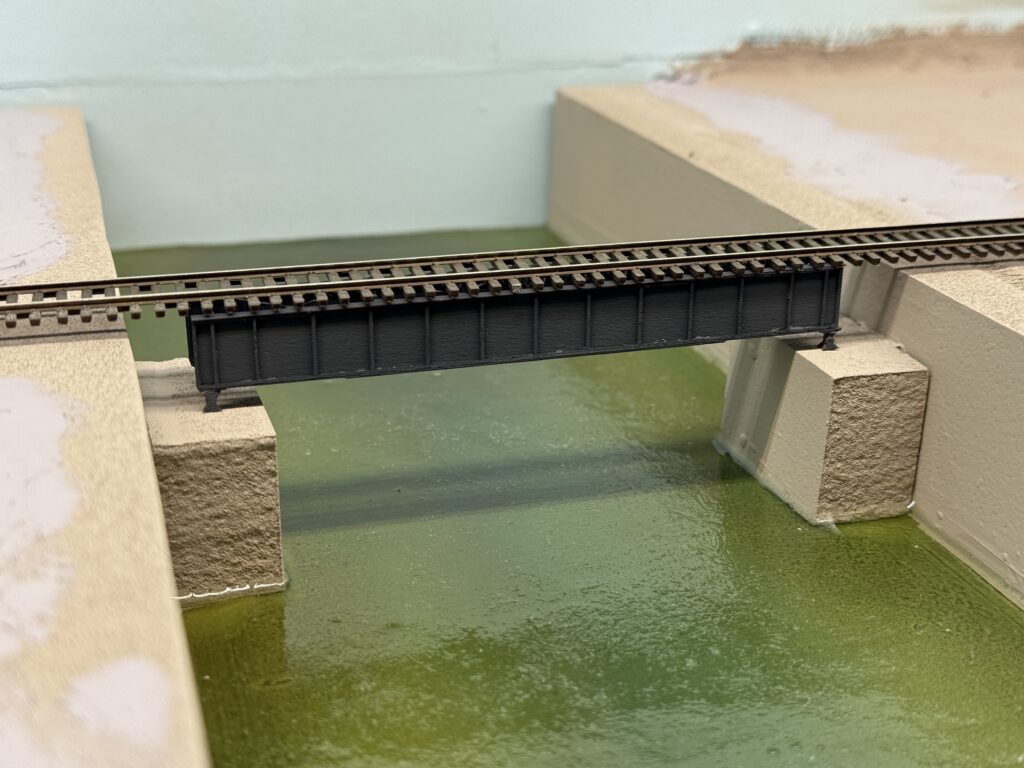
Then, I assembled an RSLaser 60-foot girder bridge kit and test fitted it in its final location.

Installing a bridge: test fitting the RSlaser kit.

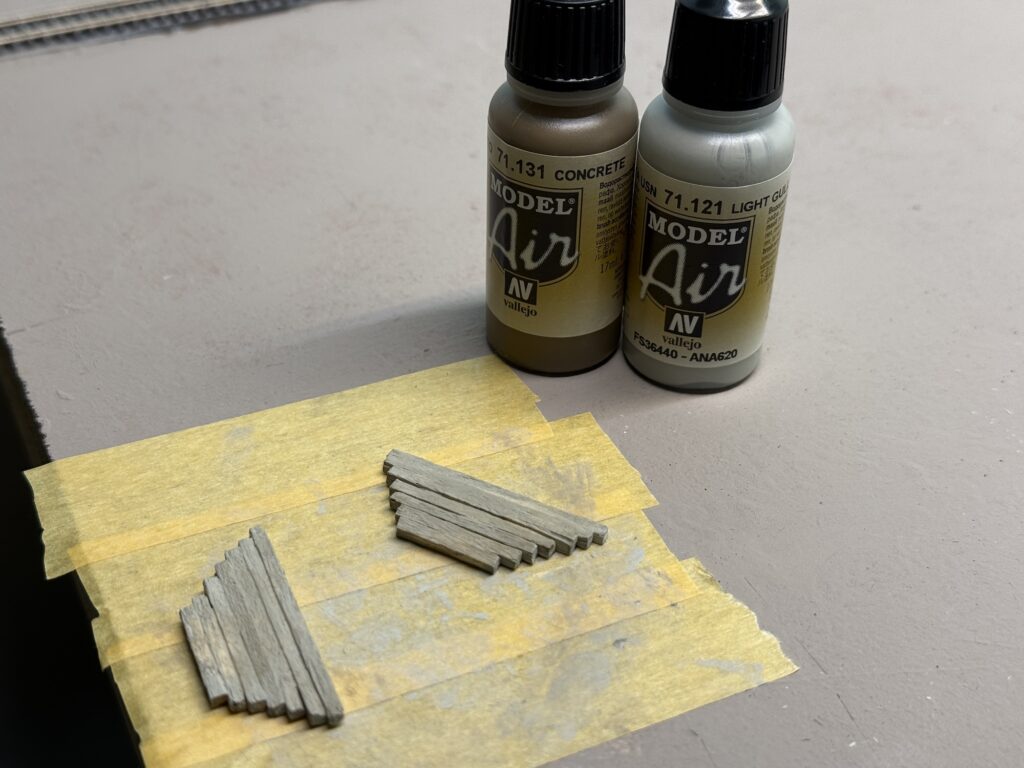
Afterwards, I scratchbuilt the retaining walls from tiny pieces of wood and painted them a warm gray tone using Vallejo Concrete and Vallejo Gull Gray. In the photo below, I’m test fitting them in place.

Retaining walls
Painting the retaining walls
Installing a bridge

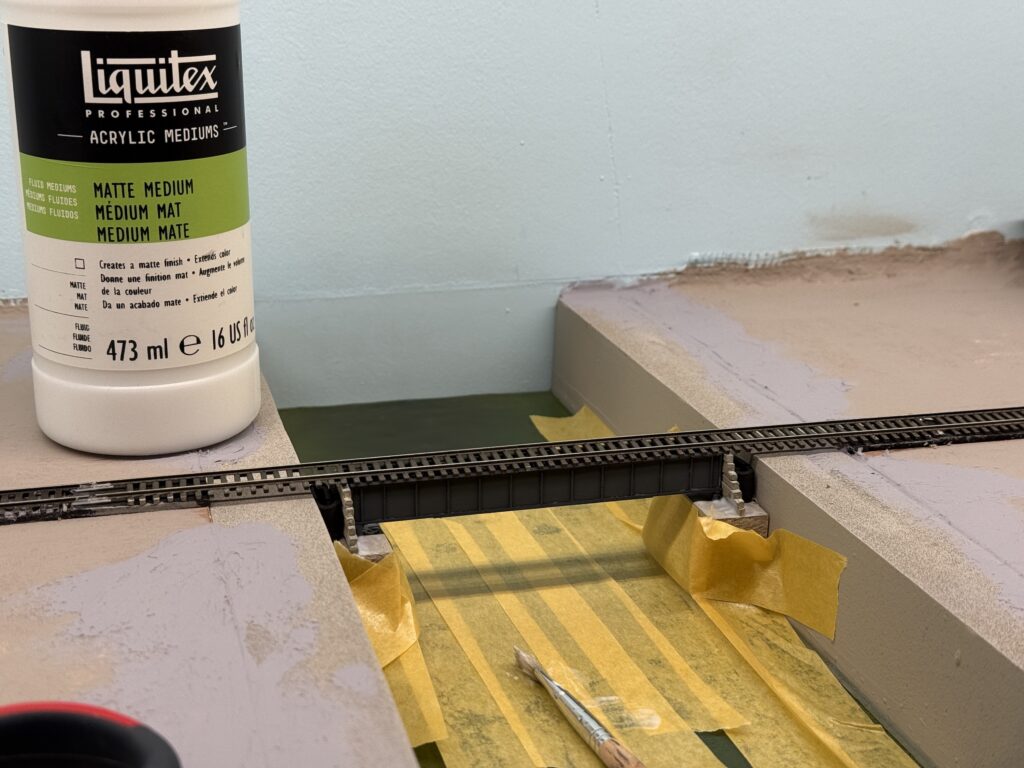
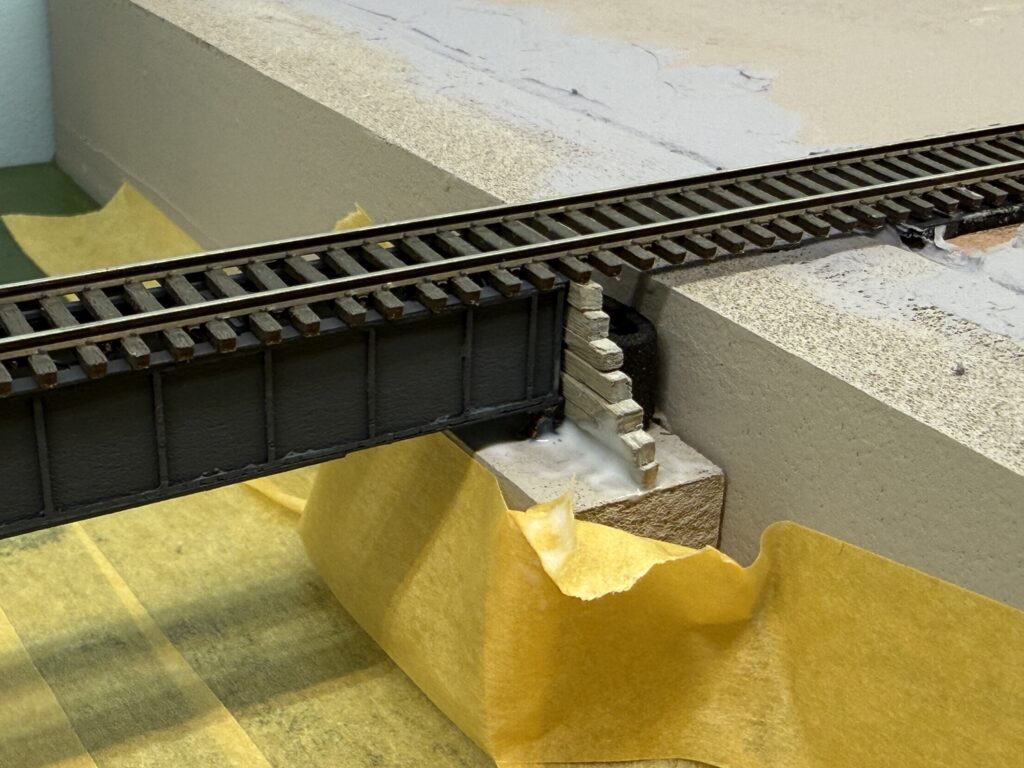
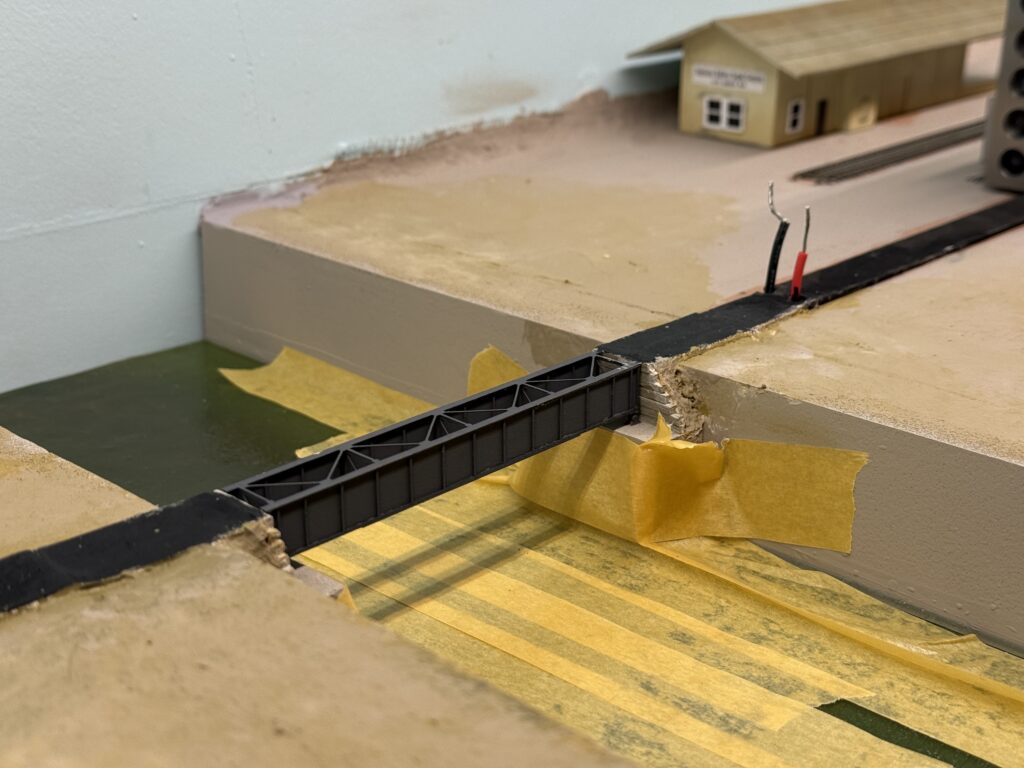
I glued the bridge to the abutments using Liquitex Matte Medium. Then, I secured the wooden retaining walls with more matte medium.

Glueing the bridge down with Liquitex Matte Medium
Retaining wooden walls glued

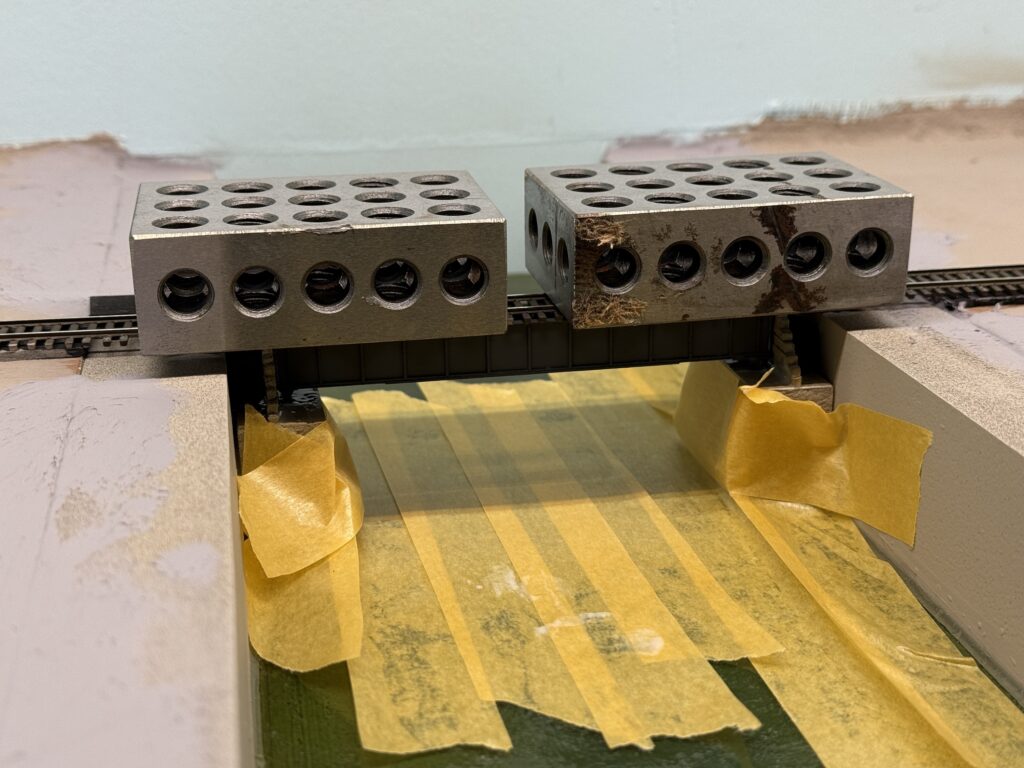
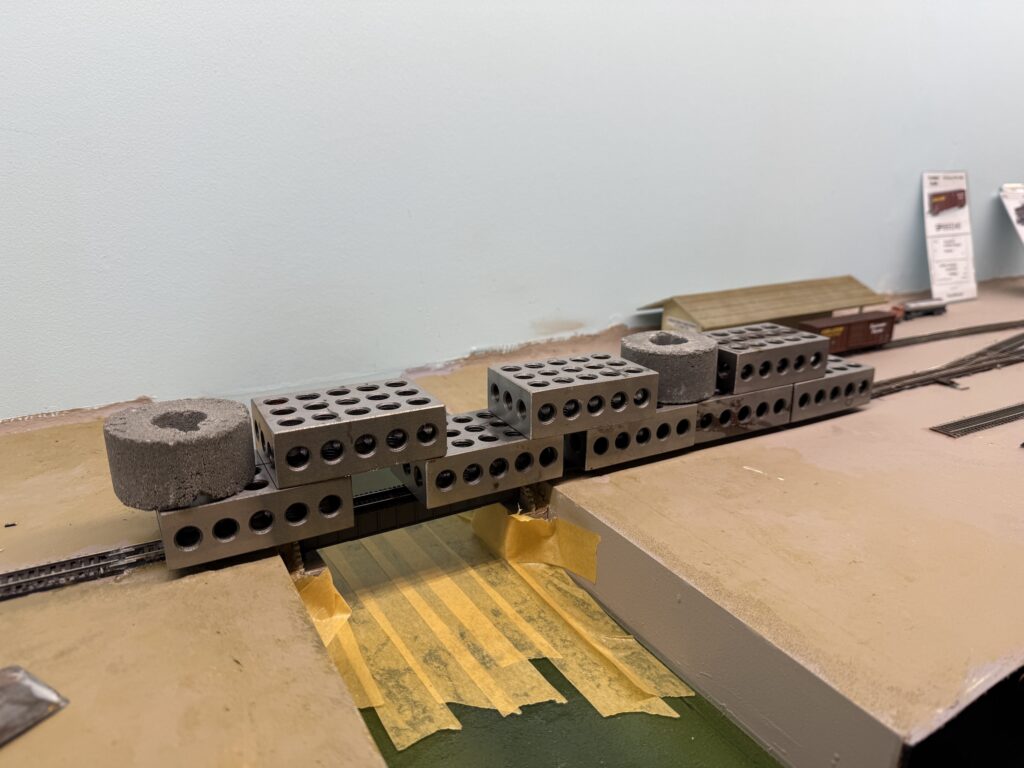
To keep everything aligned, I inserted a small piece of EVA foam to press the wall against the bridge. Afterwards, I placed a couple of metal weights on top of the bridge and let the glue dry.

Installing a bridge: keeping the bridge in place with metal weights

I added some papier-mâché terrain behind the retaining walls and painted everything a tan color.

Papier-mâché terrain behind the retaining wall

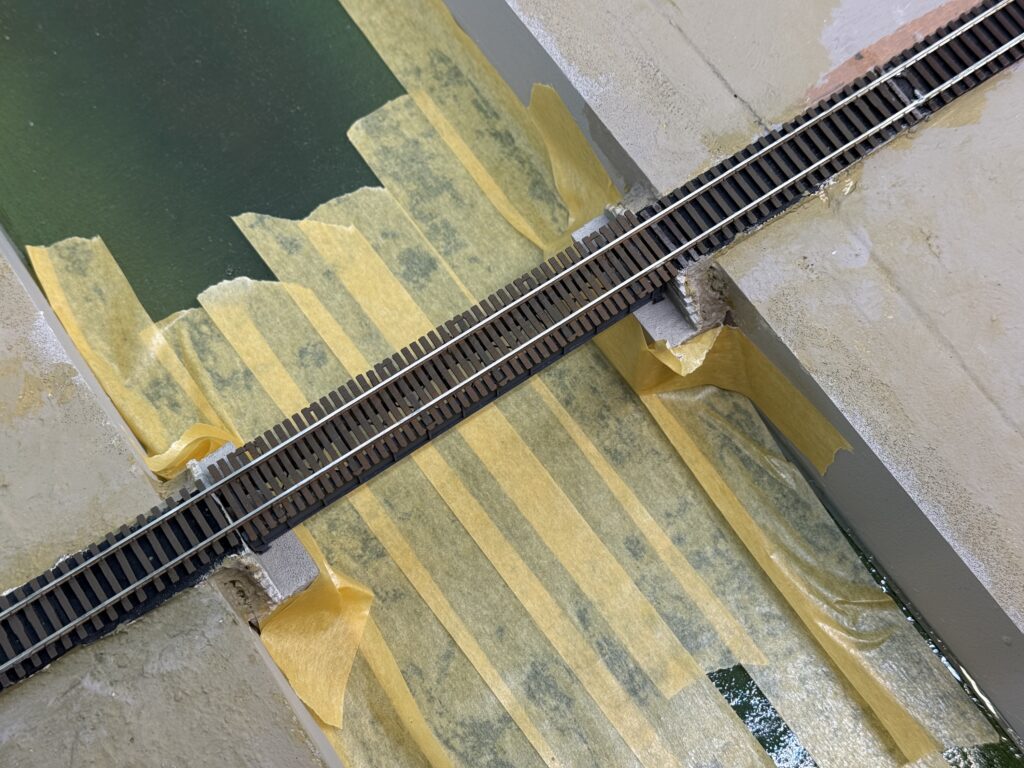
I prepared the bridge track with the correct tie spacing and soldered the feeders. Then, I carefully measured the section to install it in place of the temporary flex track I had used before the bridge was ready.

Installing a bridge: trackwork

Once the track was in place, I connected all the feeders to the main bus, cleaned the rails, and tested the track.

Installing a bridge

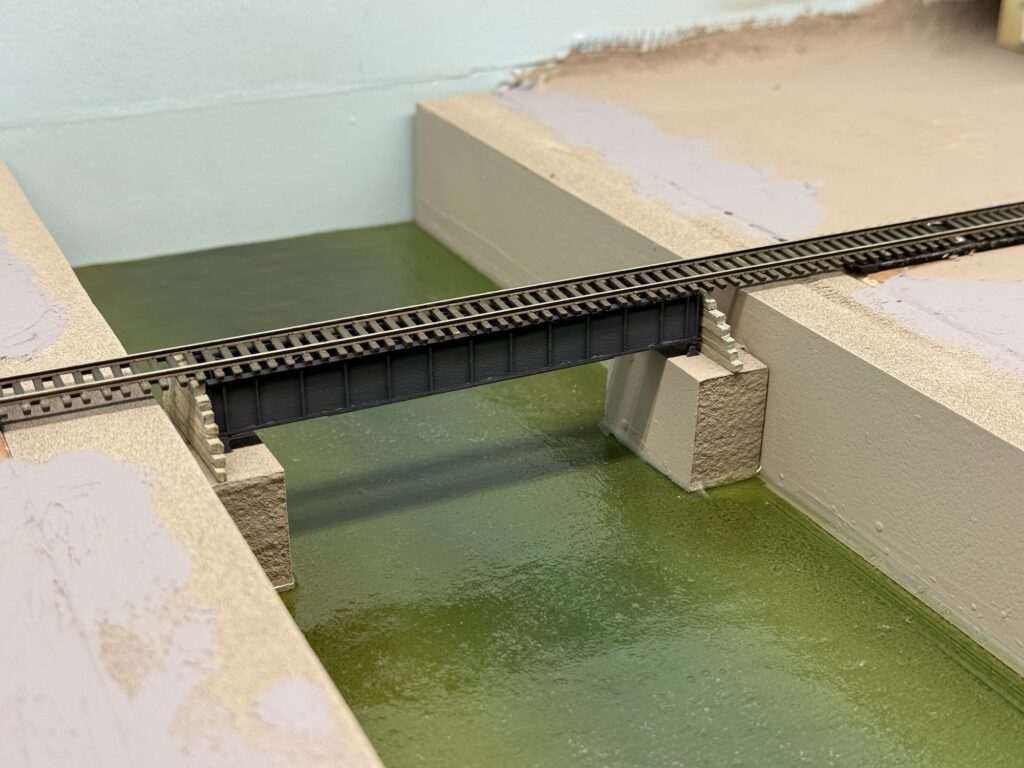
Here is the final result. It is still missing some terrain and vegetation around the edges, but overall the scene already feels much more complete.

Installing a Bridge

Ready-mix Cement Plant

After installing the bridge, I placed the ConRock Ready-Mix Cement Plant

The layout corner where the ConRock Ready-Mix Cement Plant is located will be the first area to receive scenery.

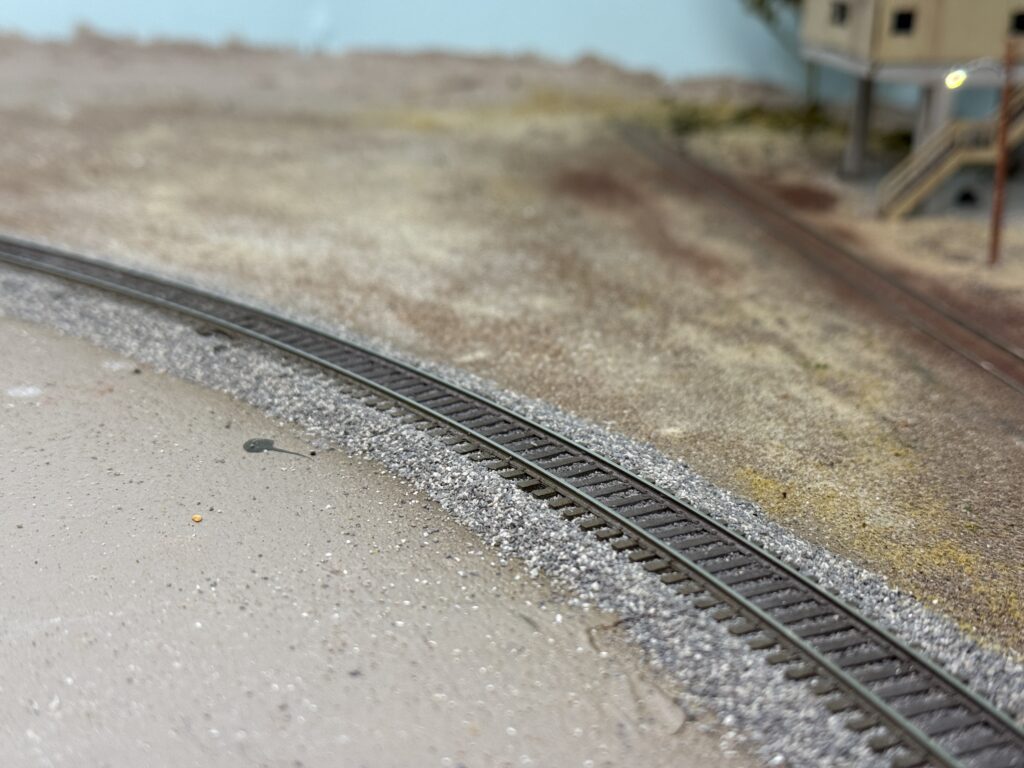
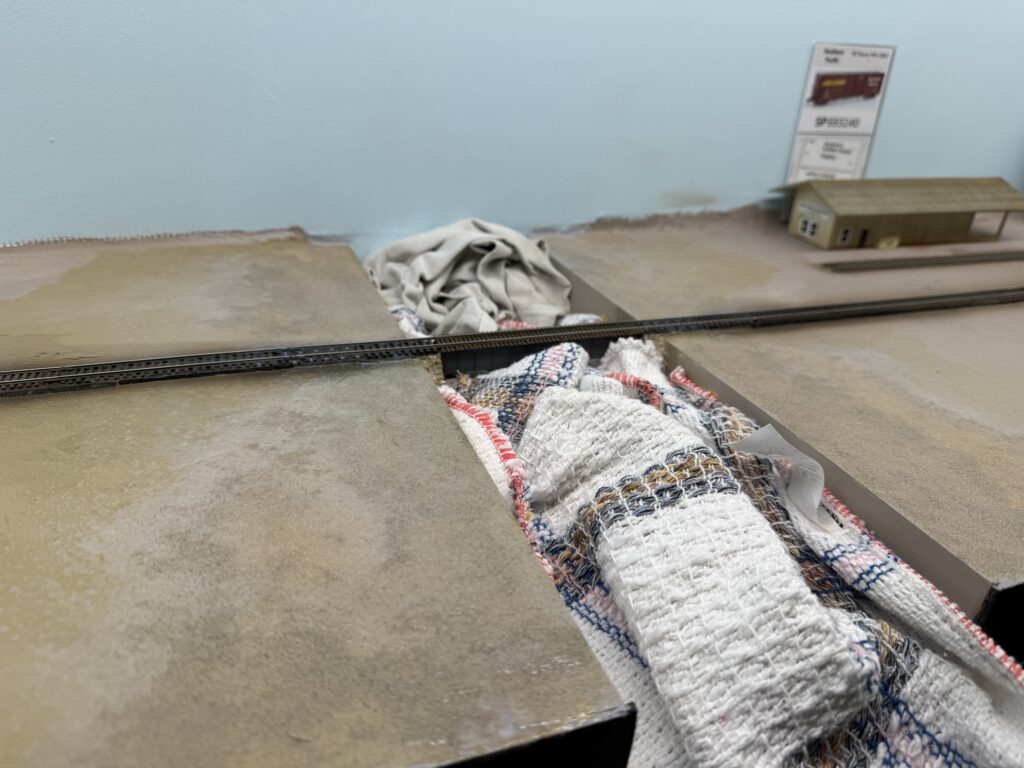
I added rough terrain texture near the bridge and ballasted the first section of track. To protect the bridge scene, I laid a couple of towels over the riverbed.

Terrain texture

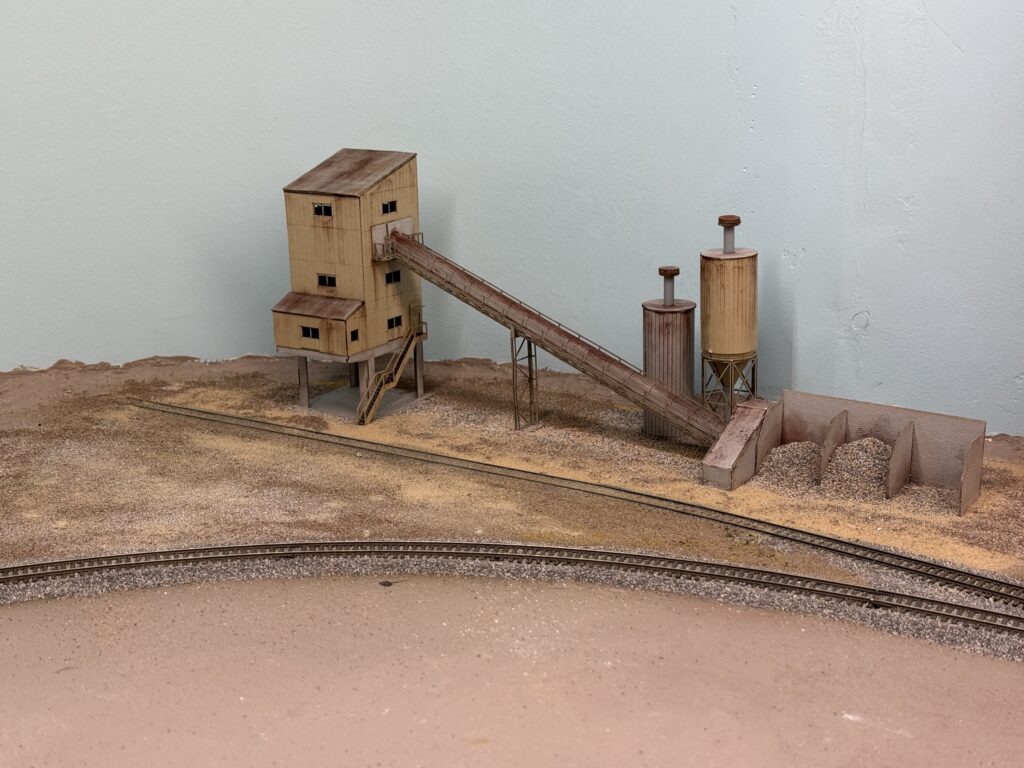
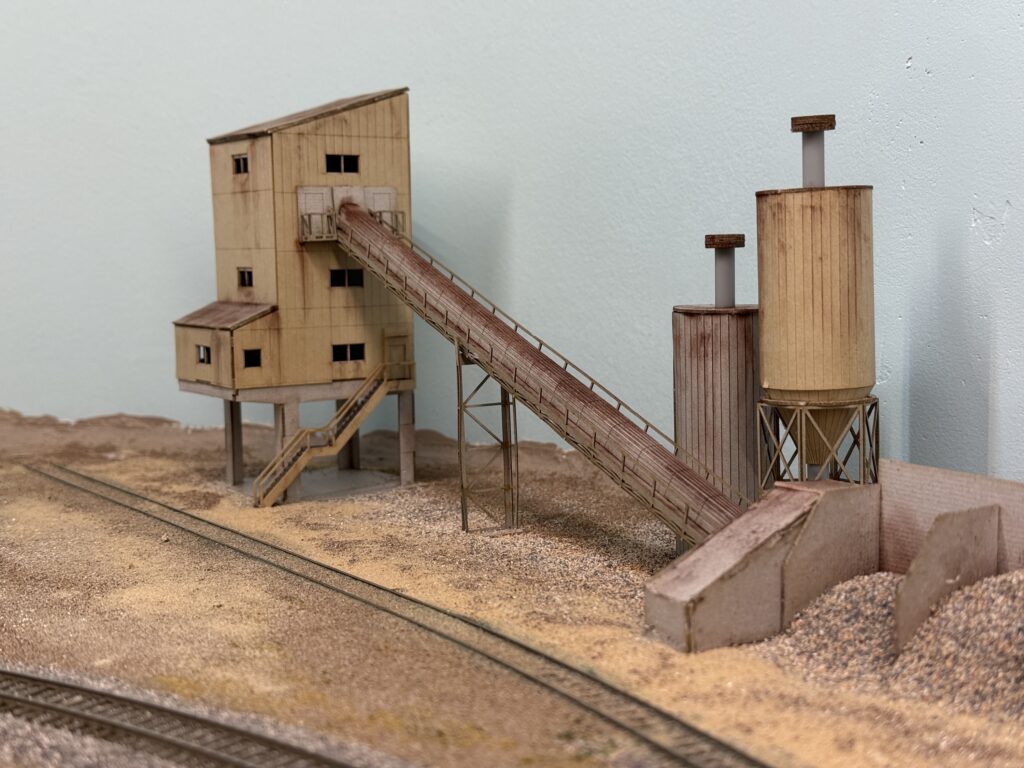
Then, I installed the cement plant structure. The building is a Japanese laser-cut paper kit that fits my needs perfectly.

Advance laser-cut paper kit of a ready-mix cement plant

The kit is made by a Japanese brand called Advance. It is a 1:150 scale model, but it still looks very good and fits the scene nicely.

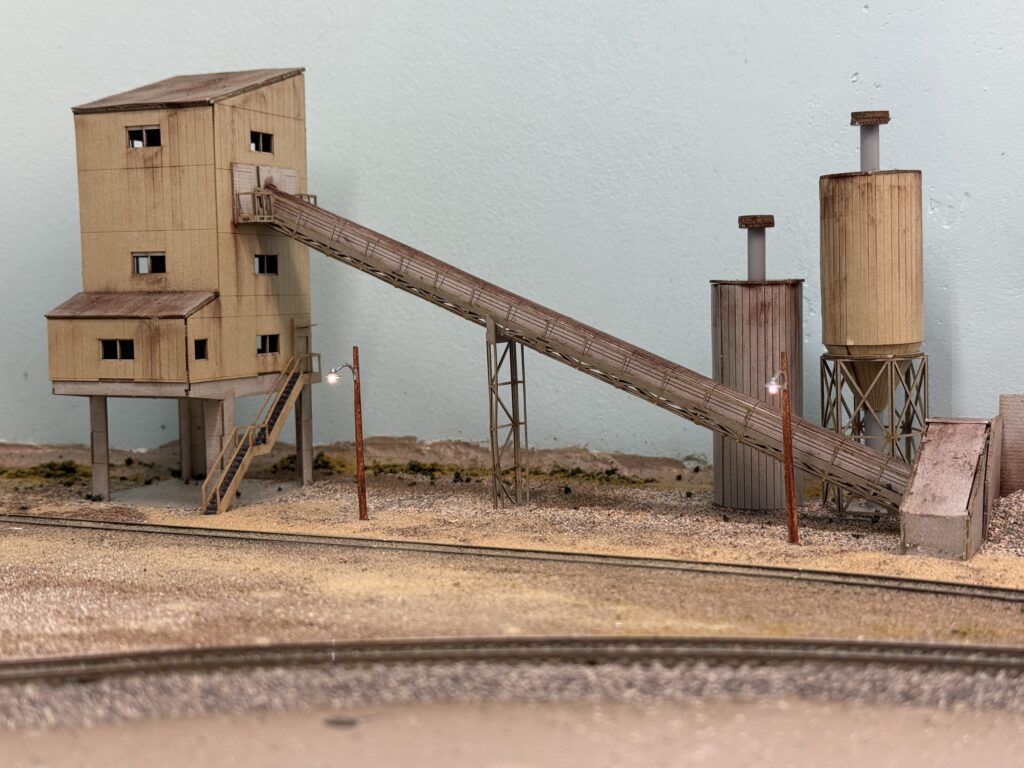
Ready-mix cement plant

I first sprayed a 50:50 mix of alcohol and water to reduce surface tension. Then, I sprinkled on some terrain powders and followed up with a 50:50 mix of matte medium and water.

The kit was weathered with powdered pigments, and the surrounding terrain was glued in place using Liquitex Matte Medium.

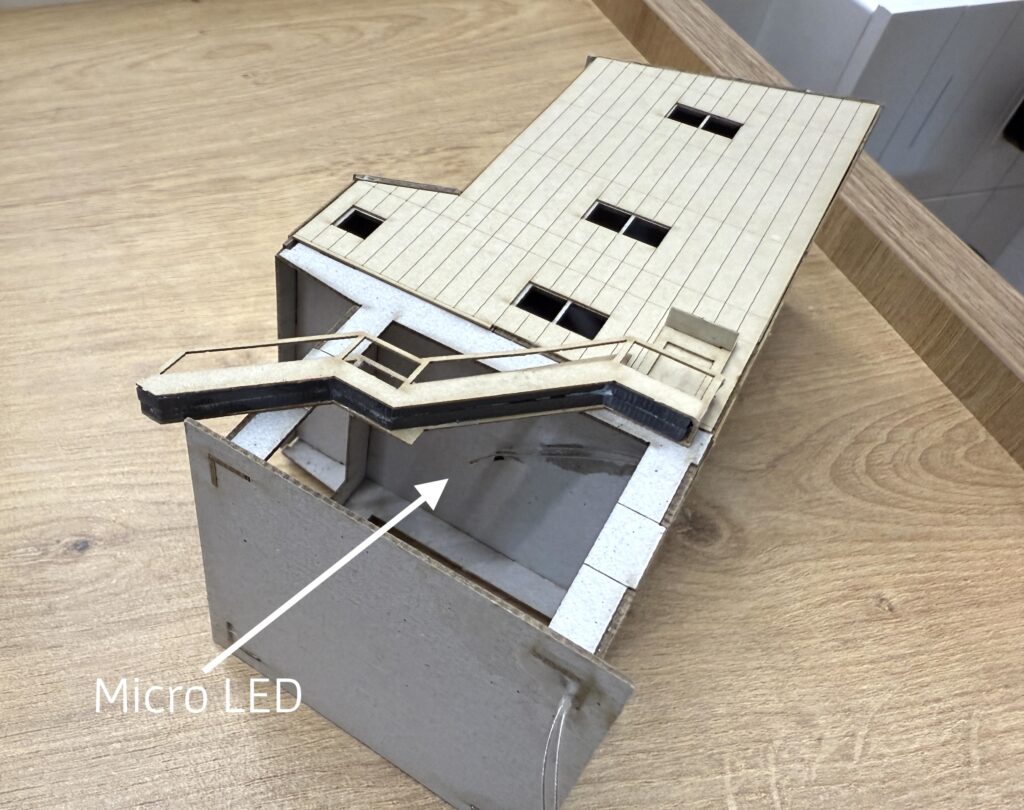
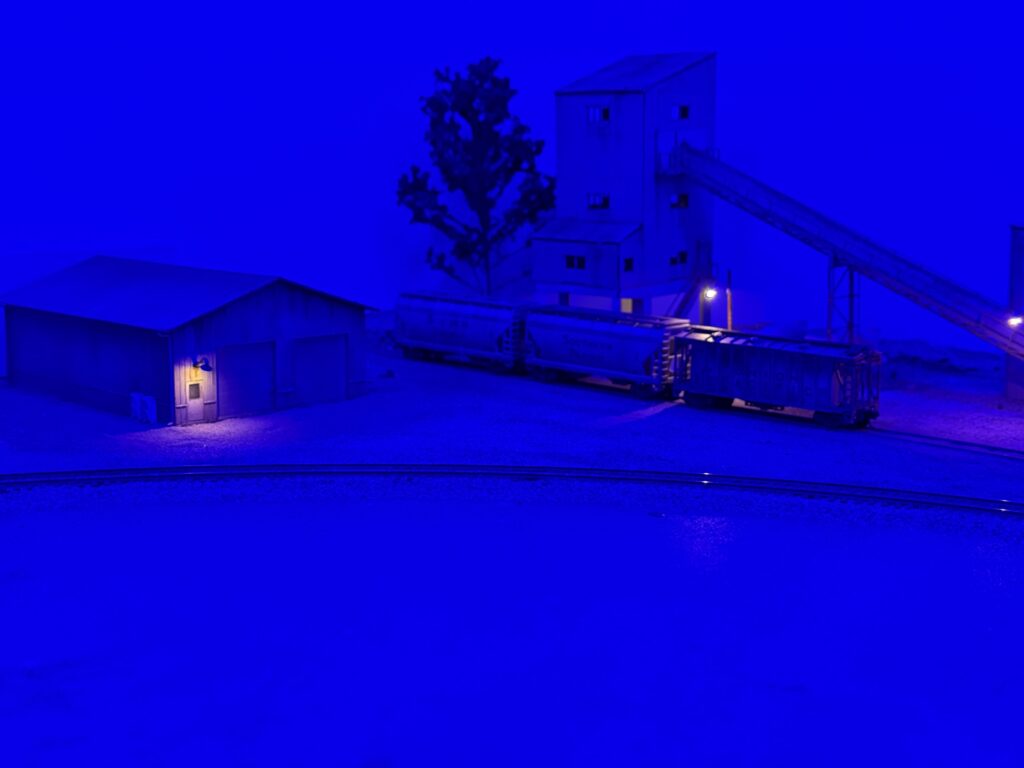
Before securing the structure to a sheet of styrene, which was later glued to the plywood base, I installed a micro LED to illuminate the scene at night. I secured the LED with CA glue and poked a hole in the structure base to run the wires through.

Micro LED installed
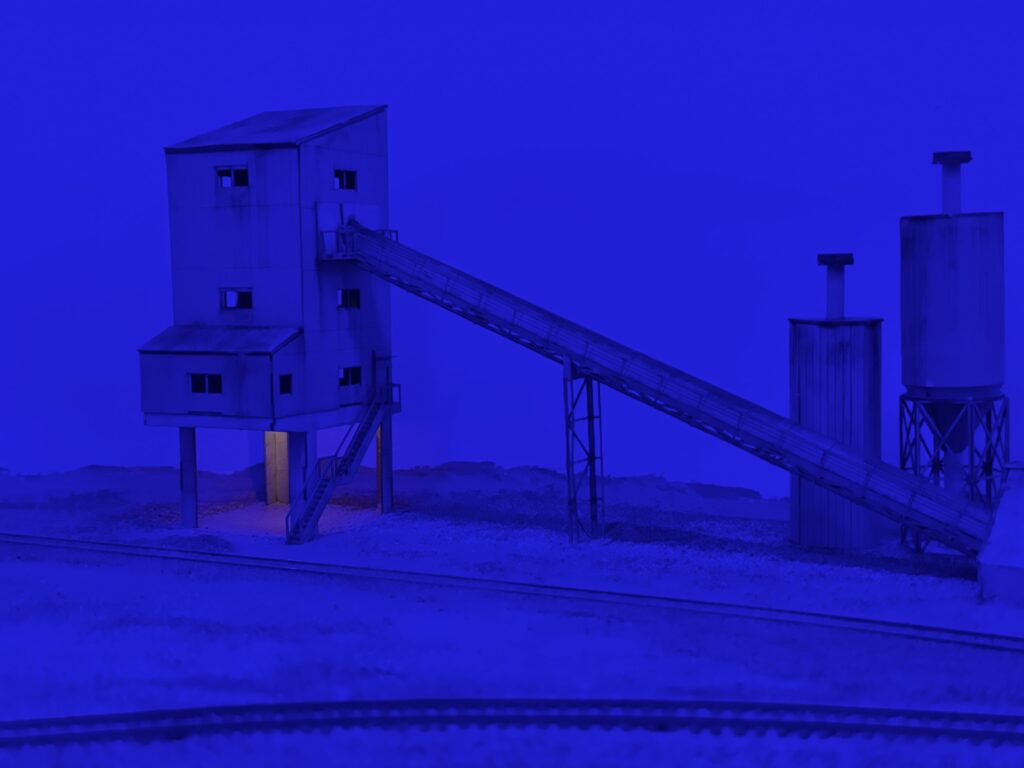
Ready-mix cement plant at night

Adding Details

The cement plant is finally in place and it feels like the scene has gained real character. Next I will focus on adding life around it, because the area still looks a bit empty.

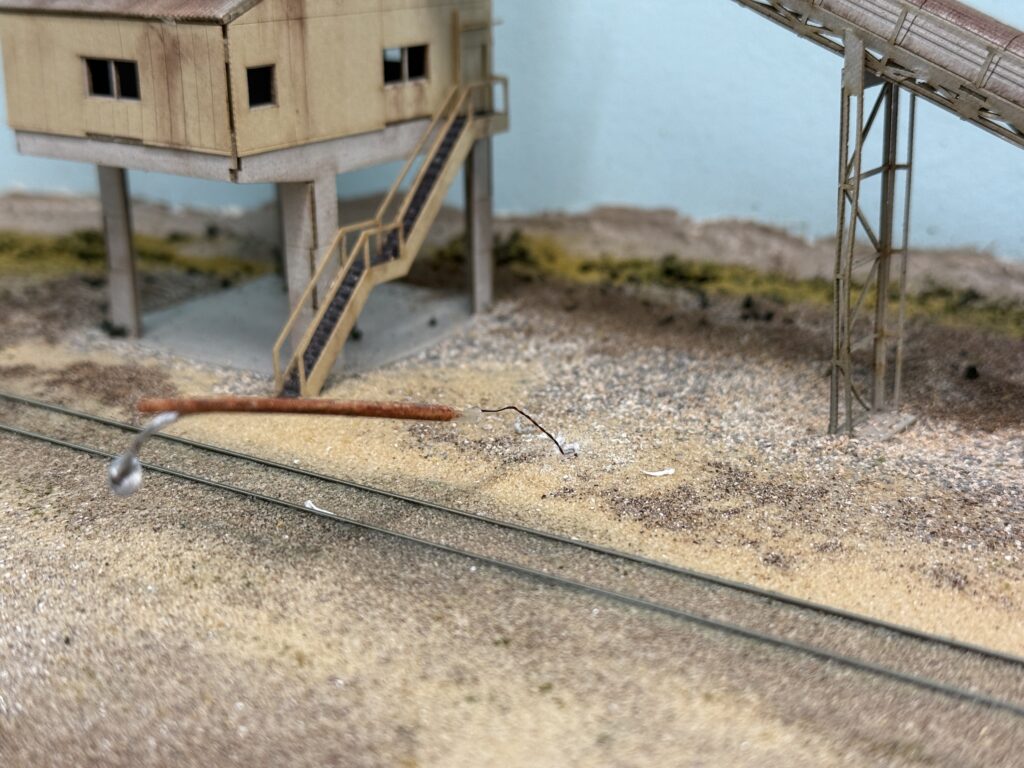
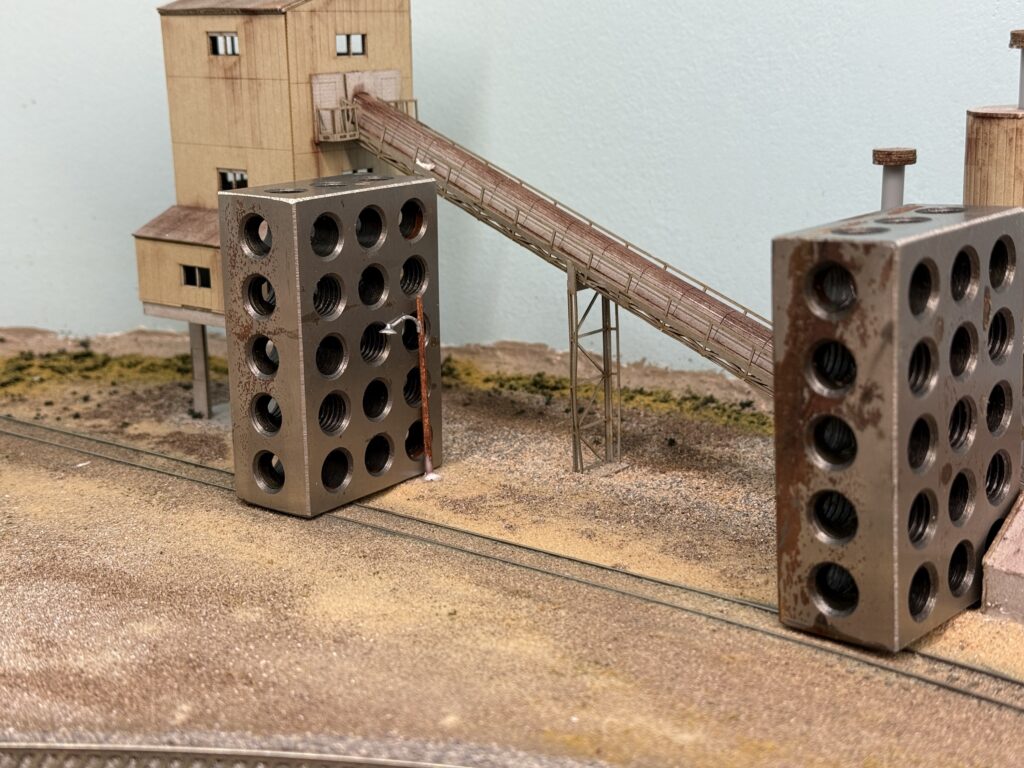
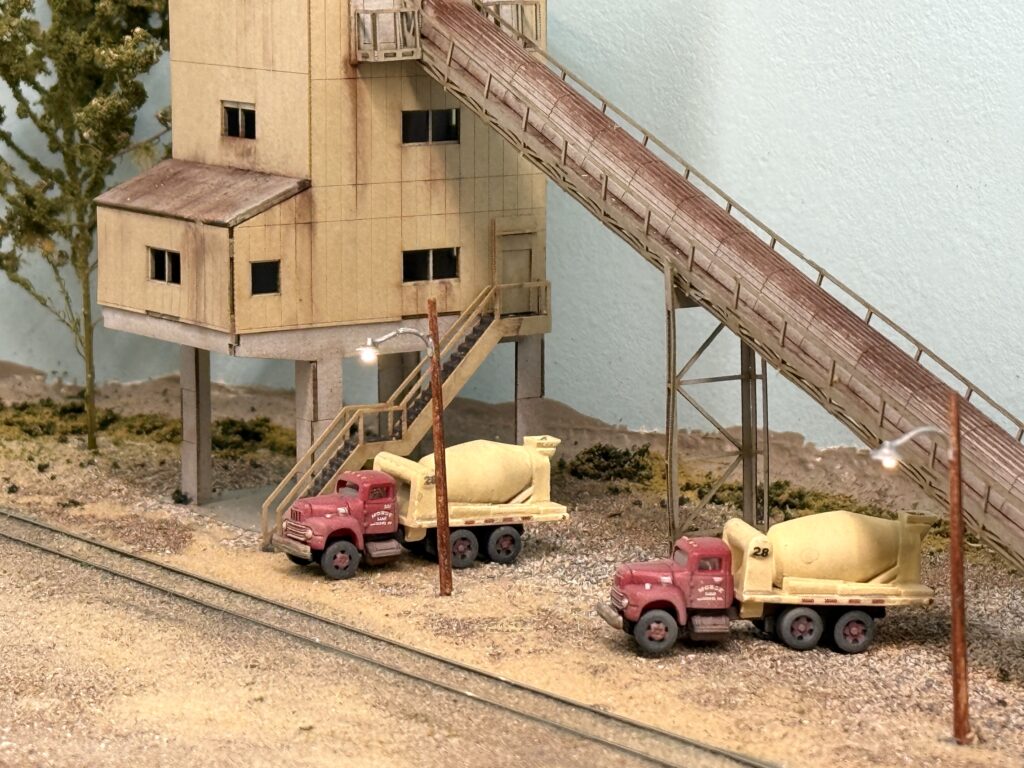
I added a couple of Woodland Scenics wooden streetlights. I drilled two holes, passed the wires through them, and glued the streetlights in place with matte medium. While the glue dried, I used some metal machine blocks to keep the poles in their final position.

Installing wooden streetlights
Streetlights glued in place
Night scene with lights
Rsady-mix cement plant

Afterwards I positioned a couple of concrete mixer trucks near the loading spots and added a tree.

Ready-mix cement plant
Concrete mixer trucks
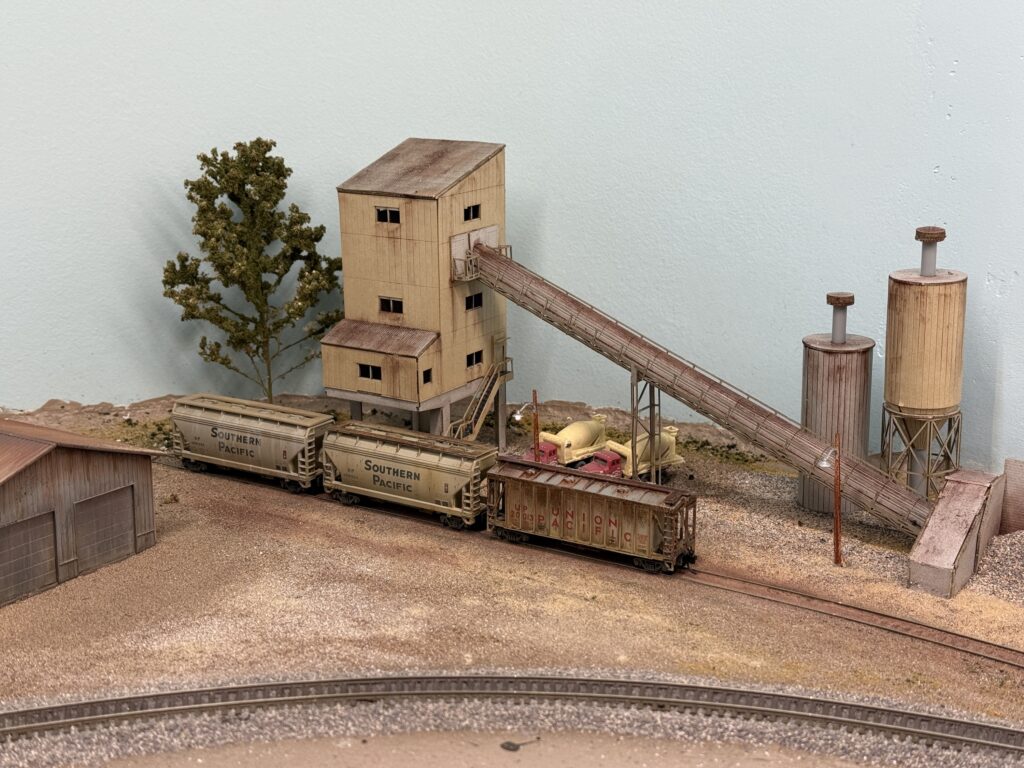
Ready-mix cement plan overview
ConRock Ready-mix cement plan night scene
Night scene
Covered hoppers

Once more vegetation is set, I will install a metal fence to frame the whole structure. So the scene will grow step by step and the finished area should blend nicely with the rest of the layout.